Showing posts with label Final Fantasy. Show all posts

Monday, January 20, 2014

Final Fantasy VI Review: Episode I

Magical Predestined Ladies, Unite!

Then it all goes to hell.
It's been a while since I last ventured into a traditional JRPG. In fact, I'm not entirely sure what was the last one I played, given that Demon's Souls was not traditional. [Edit: My last JRPG was Persona 4 Golden. I'm an idiot.] It's also been super long since I played a Final Fantasy title, my last one being XIII. Of course, this isn't just any Final Fantasy. When people fight about which is the best, this one is often thrown in with much fervor.

My first one was Final Fantasy VII, which was also the first one to be rendered in 3D. While the graphics to that one were laughable by today's standards, it is also considered one of the greats and might still stand as my favorite. I don't know if nostalgia is a big part of that, but I just remember a supremely engaging title that was fun to play and fun to witness.

Ooh, intrigue!
My husband, whom I got into the series, played Final Fantasy VI well before me and insisted that I do the same. However, I have always had a problem with reaching back when it comes to media. If I get into a musician's second album, I often hesitate to check out the first. Classic movies of the 80's that I never saw may remain unseen for my entire lifetime. And looking back into the SNES era for games I haven't played, of which there are many, is daunting. There are so many games from what is now last generation that I haven't played that going truly old school (as opposed to playing a new game with old school graphics) almost feels foolhardy.

I didn't want to play his PS1 edition, so I waited until it was released digitally and on sale to buy it. So what I'm playing now is not the Final Fantasy VI of my contemporaries' childhoods but rather the 2011 digital re-release of a 1999 special upgrade of the 1994 original. The digital release didn't add anything, but the 1999 one for the Playstation added 3D-rendered cutscenes and some other graphic retooling. Note that this edition was released between Final Fantasy VIII and IX. I guess that's what the kids were clamoring for at the time.

Starting Final Fantasy VI leads to a brief explanation that the Empire is using Magitek armor and searching for espers, magical beings of the past. A thousand years prior, there was the War of the Magi, which ended with the abolition of magic entirely, turning society into something strictly agrarian or steampunk, depending where you reside. The player controls Terra, who wears a headband that prevents her from riling against her captors accompanying her on this mission to find an esper. Terra, of course, is mysteriously able to wield magic with no other tools to assist her, and thus becomes the center of much of the story. Her green hair is of little concern, though.

Small dose of cuteness.
After finding the esper, which kills off Terra's partners, Terra ends up unconscious and under the care of some locals. Meanwhile, the Empire is taking over cities left and right for no immediately clear reason. When Terra awakes, she and her new friends hop from city to city meeting more and more people invested in finding out what's going on with the Empire and their use of magic.

Thus far, the story hasn't really resonated with me, but it's not uncommon for a Final Fantasy game to take a while to get to its point. I hope I'm not wrong in assuming that there is more afoot than an Empire amassing magic and property. There better be something more sinister or complex going on. Still the narrative was initially engaging because certain events saw the team breaking apart and meeting new people more quickly than any other title I've played. I was about five hours in and had already controlled nine people in battle, which is larger than the cast of other Final Fantasy titles.

The divergent narrative was exciting and introduced a number of scenarios really quickly, including fighting enemies while floating down a river on a raft, battling a train while it chases you, and defending a mountain top with three teams in a maze. It's been a number of hours, though, since everyone has come together again, so I'm not sure if we'll break up once more, or if this is it. For the time being, Terra is out of commission, and I'm leading my party of four with Celes, a fallen general of the Empire who was fused with magic by her employers.

Sometimes conversation happens mid-battle.
Battles are typical Active Time Battle fare, though I do find it interesting that each character has unique skills I can utilize without using up magic points. Edgar uses Tools that you can purchase in shops, which have a variety of effects on enemies; Sabin, his twin brother, has Blitz attacks, which are basically fighting game inputs that do reasonable damage, and Cyan has sword skills he deploys based on how long the player waits for a timer to count.

Celes is inherently blessed with the ability to use magic, which is handy for curing your party if you're not an items fan. (I'm not.) Unlike all of other Final Fantasy games I've played, this is the first one where magic doesn't become available to everyone until a particular story point. In the others, either they could use magic from the start (after tutorials), or they were never allowed to use magic because of their class. Still, I appreciate magic being tied to the story. In this case, magic comes with the ability to summon espers, and one learns magic from the esper equipped.

It's not a terribly complicated system, though none of them are once in practice, but I'm finding that I have almost no reliance on magic yet. Celes is still the only one I use to heal, and the others chip in when appropriate. The summons themselves fall short of the grandiose animations I've become accustomed to starting with VII. They just appear, do something ambiguous, and disappear. Maybe espers acquired later on have more to offer.

That whole crazy thing.
Actually, battles are generally amusing to me since I never had to witness them play out like they do. When a party member attacks, he or she simply waves his/her weapon and damage is done to the selected enemy. Enemies attack by flashing, and occasionally there's an accompanying animation done to a party member. Only magic and skills have more pronounced animations that actually demonstrate the characters engaging with the enemies. Again, I'm not used to this, but I do know this was once how it was.

The only technological complaint I have is for the chocobo riding, which I've only done once as dictated by the narrative. It looks like Square tried to shoehorn 3D map travel into this 2D game by flipping the perspective so that chocobos actually run on top of the map. It looks just awful, though, because everything flattens, even buildings and mountains. It's like walking on a drawing. I'd have been perfectly content riding my chocobo on the same map in the same perspective as my party does. I do miss being able to rotate the map and see objects in the distance, though. But I get it.

In terms of progress, I've played over twelve hours, mostly due to grinding, and just passed the famous opera scene. I'd like to express that it was way overrated. As a game scenario, it works just fine and is in line with the rest of the game. That's not my problem. What bothered me is that the actual opera is merely fiction that doesn't enhance the main narrative.

Bosses get to look like people…kinda.
While the song is pretty, it is ultimately just a thing that happened, and I found it challenging to connect to it on any emotional level. Couple that with the fact that you can fail the actual opera scene itself, and I'm left a little confused about why its so impactful to some people. Some folks, who I'll refer to as Six-splainers, expressed that it was an impressive feat for the technology at the time. I guess I'm inclined to believe them, but I can't seriously be expected to be floored by what the SNES could or could not do in 1994 at this point. Either the scene contributes, or it doesn't, and in my opinion, it's the latter.

The scene also exemplifies a problem I have with Celes' character. She has no agency, and seems to be dragged around at the whim of all the other characters. She was a general! Unless that was a mistranslation, or I'm misunderstanding, this should an important facet of her character. Despite my efforts to make her important, putting her at the lead of my party, she thus far has been in command of nothing. And she only performs in the opera because someone else nominated her to do so. She even objects but does it anyway with no real argument.

One of the cooler scenarios.
I will admit that I'm waiting for that a-ha moment when it all gels together. As explained above, I am assuming it's coming. I was halfway through Final Fantasy X before I cared about a single character, but by the end of the game, I was shedding a few tears for them. It just took that special something to come out of the woodwork, and right now, I believe Final Fantasy VI has that. For now, I'm just going through the motions, and it feels like I'm running on the tracks, fighting a giant hype train.

All images obtained from GameFaqs. Although I'm playing on the Playstation Vita, the Playstation emulator doesn't allow screenshots. :-(

Wednesday, December 26, 2012

To the Moon Review

This game made me cry.

There's a lighthouse involved...somehow.
To the Moon, the first commercial release by Freebird Games, is unique in the fact that it delivers its story through a game premise but ultimately lacks a lot of gameplay to speak of. In its defense, that's not a bad thing and makes what would otherwise be a 4-5 hour movie more interactive and compelling. The story takes place in what seems to be the not-too-distant future. The player controls two doctors, Dr. Neil Watts and Dr. Eva Rosalene, who have machinery capable of replacing someone's memories. Due to the conflict this can cause the patient in the real world, their business is focused on providing this service to people on their death beds. The result allows a person to die believing he or she has fulfilled his or her lifelong wish. The doctors make this task, which requires following memory's path back to childhood and offering strong suggestions to make the dream come true, seem rather rote in its execution, but their newest patient, Johnny, offers them an emotional challenge.

As the title would suggest, Johnny's dying wish is to go to the moon. He lays on his deathbed surrounded by his doctor, his caretaker, and her two children in a house on a cliff by a lighthouse. Conversations are completely composed of text, and there are no vocals except for a single song which plays in the background later on (similar to Final Fantasy VIII and Final Fantasy IX). After some light comedic elements, including a fake RPG battle scenario, the doctors get to work hooking their patient and themselves to the machine that makes dreams come true. What they find out before diving in, though, is that neither Johnny nor the people surrounding him know why he wanted to go to the moon in the first place, and this proves to be the crux of the narrative. Clearly, if you don't know why you want to do something as a mature adult, it'll be hard to convince yourself as a child to go for it.

Given its brevity, I won't delve much further into the story itself because much of the mystery starts shortly after the machine is powered on. The gameplay is relatively simple for the majority of it, though. For every memory Eva and Neil enter, they must find a gateway object which lets them travel further back in time towards childhood, but in order to do that, they must find five memories to break its barrier. This involves either picking up certain objects, entering particular places, or experiencing special events. After opening the gateway object, readying it for use involves solving a small puzzle. Based on conversations between the doctors, it is usually rather simple to find gateways back to childhood very easily, but Johnny presents a challenge, and each jump is rather short, meaning the player will be repeating this process a significant number of times before reaching the conclusion. There are eventually small variations thrown in for flavor, but none of them are remarkable aside from a clunky but funny reference to Plants vs. Zombies (the game's credits feature composer and sound designer, Laura Shigihara).

You can't tell how ugly the children are because this is 16-bit. Trust me.
Regardless, in its 16-bit presentation and simplicity, the story of To the Moon is the star of the show, and it managed to deliver probably the most emotional and unique moment I've ever experienced in a game. As the subheader would suggest, I cried. I really did. And I really had doubts that I would. For one, I have never been too moved by text conversations, and sometimes this story can be silly. Although it never overstays its welcome, the ways the different scenes seem to connect come off initially as obvious and pedestrian though cute. Eventually, there is a neat twist, which puts some of the stranger events into perspective. However, it all builds up to a moment about four hours in that left me in tears. That scene (actually, that line) coupled with the following events wrapped this up as one of the most wonderful stories I've had the privilege of experiencing.

Even though there is not much game to speak of regarding To the Moon, I think everyone who believes in making emotional connections in video games must play this. At the very least, it's not too challenging to get through, and the whole experience is short enough to cover in a few play sessions. Do yourself a favor, and go for it.

This game is currently on sale on Steam and GOG for $4.99.

Tuesday, September 25, 2012

Play with My Father

Just once would be nice.


I think it would be fair to say I could attribute my love of video games to my father. Well, sort of. My father was always into new technology, and he always wanted to show me the latest gizmo he bought. His interest in electronics and the like was the polar opposite of my mother, who continually resisted anything that came around. Naturally, I became attracted to the digital image and its interactive manipulation. Despite how he always exposed me to and bought me new electronics and toys, it saddens me that he never really joined me in playing them. Even worse, until recently, he always expressed a constant derision towards my life's passion.

Before there was color, there was green.
For my seventh birthday, I asked for the original Nintendo Game Boy. To this day, it is the only handheld system I ever owned, and I poured a lot of hours into it. In fact, I still have it, though I haven't tested its operational faculty in a number of years. Not that I was big into sharing, but I was surprised when my father wanted to play Tetris on occasion. I didn't appreciate it then, but looking back, it was cool that he wanted to play a game at all. That was the only one, though, and he never expressed any interest in the other games I had. Eventually, he also stopped playing Tetris, though he never played it enough for it to be considered sudden. That was it. I never saw him play another game since.

That isn't to say that was the last game he showed interest in. One day, when our home computer was still the Macintosh Performa, he came home with Zork Nemesis: The Forbidden Lands, a graphic adventure game in the same vein as Myst. I was definitely excited since I loved Myst and really looked forward to playing another puzzle game, and I was excited that he wanted to play it with me. The excitement was over almost as quickly as it began because we ignored the hardware specifications that called for at least double the RAM we had on board, and the game would not even launch. As unfortunate as this was, it was more disappointing when he never came back around to play even after we bought and installed the upgrade. I don't know why, and I didn't ask. I just played and enjoyed the game alone and thought nothing of it.

So that was the last game he ever told me he wanted to play, and he never played it. This actually never began to bother me until the last few years. My parents and I did a lot of things separately. Sometimes, we'd all watch the same TV program in our own rooms. Thus, playing video games by myself didn't phase me one bit, and I never grew a desire to play with them either. Nothing about that seemed wrong to me. The time I would spend with friends was sporadic (I was not popular), so I found myself gravitating towards more single-player experiences. Sure, there were games like Street Fighter II and Eternal Champions that were more fun to play with friends, but you wouldn't believe how much time I'd spend playing against myself or screwing with Game Genie codes.

So began my own personal adventure.
Coasting a large number of years into the future, my true love of video games was ignited when I played Final Fantasy VII on PC in 1999, the first half of the last year of high school. Although I played Myst, most of the games I played offered shallower stories; I never encountered something so layered nor with optional story content to discover. After that, I became more insistent that I continually needed something to play. I needed another story. My first "real" relationship, which took place during most of my time in college, was with a guy who would play with me. We even bought a Nintendo GameCube together. Although we had multiplayer games to play with friends, such as Super Smash Bros. Melee and Super Monkey Ball, our definition of playing with each other and friends often meant one person playing a single-player adventure while others observed. Even today, this is how I typically enjoy experiencing new games – watching friends demonstrate what they have to offer. It may sound silly, but to me, any game was as exciting to watch as Uncharted 2: Among Thieves.

Years after dropping that human waste of time, I held out until I met another guy who shared a passion for video games with me. At the time, it was more challenging than it probably is now, what with Gaymercon starting next year. But I met the love of my life, and we have spent six awesome years now playing and loving. I definitely play significantly more than he does, but he has always shown interest, and there are games he loves and have elicited strong emotional responses from him. (He handled a certain scene in Final Fantasy VII a lot worse than I ever did.) However, it was also during the time we've spent together that my father became rather adversarial towards my hobby. My parents naturally ask what I've been up to since the last time I've seen them, and usually I answer with a game I'm playing. My father's natural response has always been dismissive, instantly losing interest in me talking about it further. But there eventually came snide comments, too. I remember speaking at dinner about the Overlord DLC for Mass Effect 2, and I specifically wanted to talk about it because of how it involves autism. My only brother is autistic, so it is definitely a relevant topic of discussion in their house. However, when I began to explain that Mass Effect is a science fiction game, my dad quipped, "all [video games] are science fiction." No, it doesn't make any sense, but I could tell there was no point in continuing to talk about it.

The majority of the Myst games were about a father's relationship with his sons.
Things came to a head a few weeks ago as my boyfriend and I were leaving my parents' house to go home. My father asked what we'd be doing with the rest of the night, and I stated that I'd be playing, and my boyfriend stated he'd be watching a movie and maybe playing. His response was something to the effect of "Tell me how it is. The movie, not the video games. I don't care about that shit." So the conversation went.

"They're not shit."
"I think they're shit."
"How can you continue to put down the thing I love to do most like that?"
"It's shit to me. What do you want me to say?"
"I would never put down something you're passionate about. And it's shit that you would say something like that to me."

He just shrugged, but I was rather angry as I drove off. I always got annoyed when he'd dismiss me, but this just took the cake. It was the first time he really just said it plainly, and he managed to make it as offensive as possible. The last thing I said was true, though. I may not have interest in many things my friends love, such as sports, – I may not even care the slightest bit about them – but I would never tell someone that this thing he or she is so excited about is shit. I'd just say I don't like it myself.

Deus Ex: Human Revolutions allows the player to proceed through the whole game without killing (almost) anyone.
From this negative experience came a positive.  It took two weeks, but shortly after my birthday, in response to something completely unrelated, he apologized. He expressed a sincere regret for putting down what I love to do. My father also finally articulated one of his issues with video games, that being the violence in them. It is kind of funny, actually, since he watches and likes some violent movies, and he even owns some firearms. However, I think the issue for him is actually participating in the violence, something movies don't require of the viewer. He actually expressed that he loved Myst, which I don't remember him playing but was once the buzz of the house. This was a significant step forward, and I felt very touched to finally learn more about him.

My response to him was that not every game is violent, of course. Without a doubt, I own some games like Mortal Kombat where the violence is gratuitous, but I wanted to tell him that I'm not always a death dealer. Aside from sharing the artfulness of games like Journey and Papo & Yo, I also went on to talk about games like Grand Theft Auto IV, which match exciting and well-written plots with the violence. I even expressed that some of the best games make you question whether you want to commit violence like Deus Ex: Human Revolution. Most importantly, I told him that I regret never playing Zork Nemesis with him. It only took 16 years to realize that it would have been nice.

Zork Nemesis, the bonding experience that never was.
Sadly, I think that's the end of the positive result. I told him that I own all the games from the Myst series, the sequel, Riven, being incredible, and how I could easily install them and Zork Nemesis on his laptop. However, he said he's too old to play them and doesn't have the attention span for them. I feel like I lost something there. I don't know what exactly. I don't know that if I attempted to include him on what I was playing when I was younger that he would've joined me. Still, I feel much better knowing that my father understands what it means when someone puts down something you care about and that we're past that era of our relationship. I hope one day he'll play by my side, though.

What about you? How involved are your parents with what you're passionate about? Do you play games with either of them? Please share your experience.

Friday, August 17, 2012

Music: I Love Video Game Soundtracks, Part II

Where the writer realizes his folly in trying to fit his passion into one blog post.


Yesterday, I went on quite a yarn about my love for video game soundtracks, and I managed to name some of my top picks for composers. But the sad truth is I just wasn't done. I simply felt bad for you, the reader, who would be forced to endure a year-long blog post, so I split it into two for your convenience. Without further ado, here are my remaining notable video game soundtrack composers.

Nobuo Uematsu

What I have heard: Final Fantasy VIIFinal Fantasy VIIIFinal Fantasy IXFinal Fantasy XFinal Fantasy VII: Advent Children

"Prelude." One could make an argument for many of his songs as iconic, but "Prelude," a repeated theme throughout the Final Fantasy series (most of which, I have not played), not only acts as an introduction to some of the iterations, but hearing it invokes the spirit and memories of every Final Fantasy game you've ever played. There are several versions of it, but oddly, my favorite it the live version, as performed by the Distant Worlds orchestra. If you ever get a chance to see them perform, it's amazing, and Nobuo is usually not far. Aside from the larger game themes, such as "Liberi Fatali" and "The Place I'll Return to Someday," many fans remember the smaller pieces clear as day. Some of my favorites include the latter portion of "The Planet's Crisis" (FFVII) and "You're Not Alone" (FFIX). Often, the best way to describe his work is very JRPG and very fantasy, but there's a reason he's famous. It may have something to do with the memorable tunes.


Michael McCann
What I have heard: Deus Ex: Human Revolution

Even if you have not played the game, you probably watched the first epic trailer that came out for the game, which revealed the main story arc. The background music is the vocally lush sci-fi piece called, "Icarus." This and the remainder of the soundtrack really make the case for orchestral music standing alongside electronic music. You are never taken out of the futuristic setting of the game as you peruse the tracks composed by McCann. Notable tracks include the exciting "First and Last" and "Return to Hengsha," which layer the action elements of the game successfully into the sounds you hear.


Andrew Hale
What I have heard: L.A. Noire

If you listened to the L.A. Noire soundtrack without knowing what it's from, you'd think you were listening to an old movie soundtrack. Emulating a time period without grotesquely mimicking it can sometimes be a challenge, but every track in this album is a trip to another era. You can feel the mystery and tension build with each track, and the navigation from sweeping orchestras to soft jazz successfully root the listener in the spirit of the late 40s crime dramas. What I also enjoy about this soundtrack is Hale's suites of songs, which serve as the background to specific chapters in the game. Although they waver through highs and lows, their tones are usually fitting for the moments in the story they represent.


Bill Elm & Woody Jackson
What I have heard: Red Dead Redemption

This soundtrack is one of utmost quality. Like Andrew Hale's L.A. Noire, it successfully invokes the era of the game's setting, but where it stands apart is in how it modernizes it. You'll hear authentically Western-sounding guitar arrangements and string movements, but they will be layered on top of drum-and-bass beats and jarring arrangements. The build of the drums and orchestra in "El Club de los Cuerpos" hook me every time I hear it, especially one the herd of trumpets chime in. I also adore the percussion-navigated trip of "Triggernometry," whose main brass melody served as my phone's ringtone for a number of months recently. All the tracks serve the Rockstar pulp fittingly.


Mike Morasky
What I have heard: Portal, Portal 2

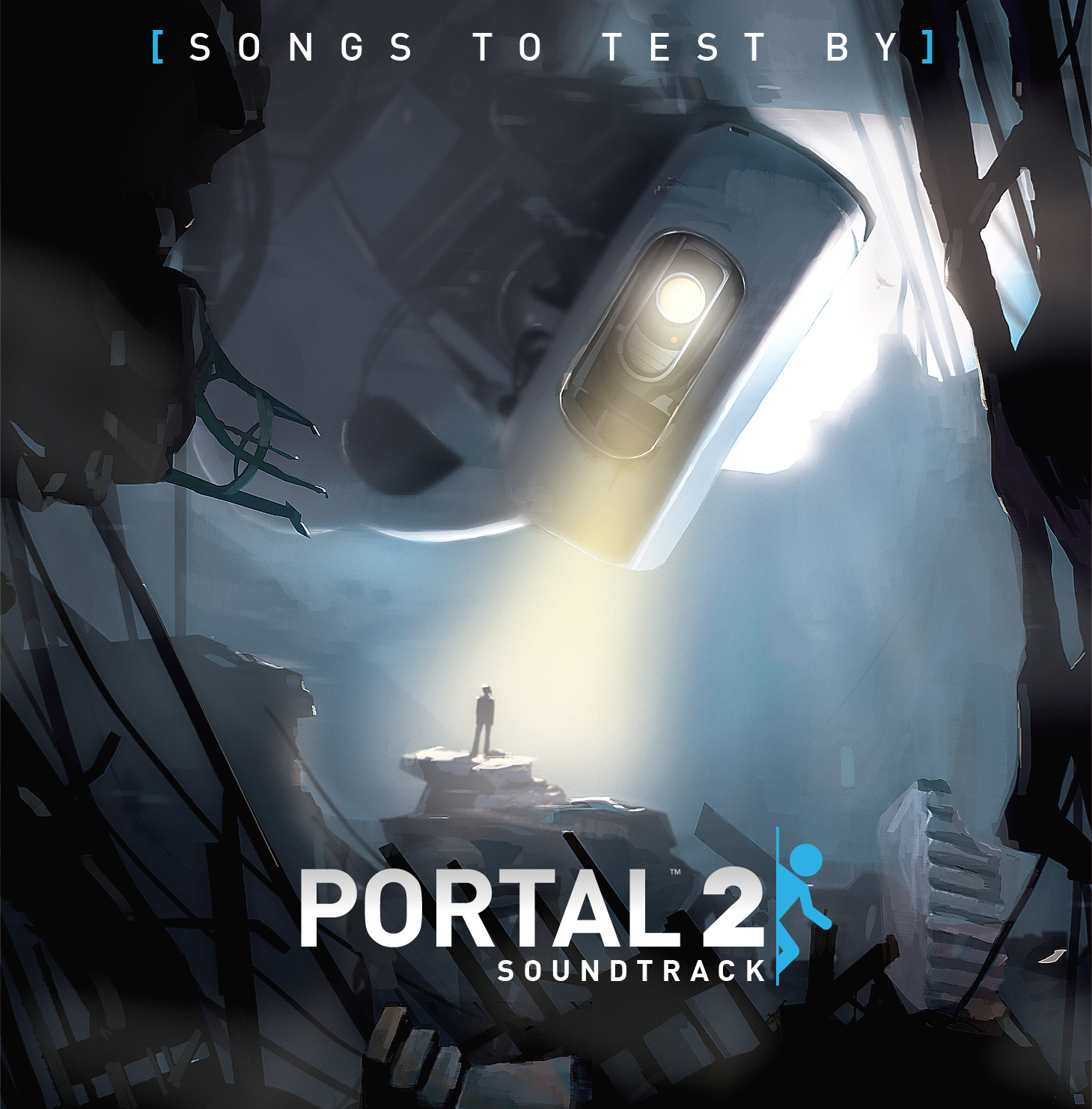
Although most of us only recall Ellen McLain's singing on "Still Alive" from the original Portal soundtrack, there is so much more to take notice of with Mike Morasky's compositions in Portal 2. There are obvious star songs like "Science Is Fun" and "You Will Be Perfect" to enjoy, but many of the tracks on the 3-disc score were procedurally generated in the game, meaning everyone's first experience with these songs was unique. Still, the composer, under the pseudonym, Aperture Science Psychoacoustics Laboratory, managed to bring all his samples together for an intriguing journey through the rundown puzzle gauntlet of the game. "Love as a Construct" and "You are Not Part of the Control Group" are two good examples of songs culled from these moments in the levels, and they ultimately add to the atmosphere of awe and wonder the player feels while trying hard not to die. Of the soundtracks I've mentioned thus far, it's worth noting that the orchestral work takes a back seat to seriously creative and compelling electronic musical structures. They typically return during larger story moments, but it is hard to miss them with all this good music being offered.

And the honorable mentions...

Without pumping out the theatrical writing for every soundtrack I own, I did want to mention additional selections from my library worth owning and listening to. (Also in no particular order.)

Tim Larkin
Songs of Note: "Villa," "Great Shaft"

Vincent Diamante
Soundtracks: Flower
Songs of Note: "Sailing on the Wind," "Purification of the City"

Solar Fields
Soundtracks: Mirror's Edge
Songs of Note: "Heat," "Pirandello Kruger"

Akira Yamaoka
Songs of Note: "Breeze - In Monochrome Night," "Room of Angel"

Adam Skorupa & Krzystof Wierzynkiewicz
Soundtracks: The Witcher 2: Assassins of Kings
Songs of Note: "The Path of a Kingslayer," "For a Higher Cause"

Tomas Dvorak
Soundtracks: Machinarium
Songs of Note: "Mr. Handagote," "Gameboy Tune"

Normand Corbeil
Soundtracks: Heavy Rain
Songs of Note: "Lauren Winter's Main Theme," "Before the Storm"

Jami Sieber
Soundtracks: Braid
Songs of Note: "Maenam," "Tell It By Heart"

Thank you for indulging me in this journey through one of my many loves. Please let me know what soundtracks you love!

Images taken from Amazon, iTunes, and other Googled sources.

Thursday, August 16, 2012

Music: I Love Video Game Soundtracks, Part I

No, really, I'm serious.


My first video game soundtrack was Burn: Cycle, composed by Simon Boswell. The PC version of the game came with it by default. (By the way, does anyone remember the CD-i?) Be that as it may, it only ignited a small flame within me that would not rage into a fire for many years. Still, there were a few other notable additions to my soundtrack collection until it became a full-on obsession. I was among the small population that owned a Sega Saturn, which I purchased mainly for NiGHTS into DREAMS. I loved the game, but somehow or another, I discovered that the themes to all the boss battles, not the level music, were accessible via a regular CD player. That said, it meant I could eventually rip the music onto MP3 format once that became popular. The next game I could do this for was Earthworm Jim 2, which was composed primarily by Tommy Tallarico. That soundtrack was a double bonus because it contained some awesome tracks from him, but it also had the 3rd movement of Moonlight Sonata (Beethoven), which I think is the best movement.

It wasn't until Myst III: Exile did my interest truly get sparked. The theme to that game really opened my eyes to the potential a game soundtrack could possess. It also spoke to me directly as I have a rather exploitable love of songs that start small in production but become booming choral masterpieces by the end. Thus, Jack Wall created the standard by which I would judge future soundtracks, and the next one I would actually own would be Myst IV: Revelations, whose main theme is an awesome tribal piece done with a choir in 7/4 timing. However, it was hard to maintain just one composer to love as time went by.

Stepping back a little to the year, 2000, that is when I played Final Fantasy VIII on the PC. While I wouldn't own the soundtrack for a number of years, I think many gamers around the world are with me when I say this: "Liberi Fatali," the opening theme to the game, is a masterpiece on par with "Carmina Burana" (Orff) in terms of drama and fantastic choral work. I must have started a new game about 50 times either to watch the opening sequence myself or to show it to others, and it always solicited a "wow" response from my friends.

Well, these are my origins, but I won't go into every single inspiring soundtrack I've come across. There are probably many more I forgot or cannot access anyway. What I will focus on is the composers and their soundtracks or notable songs. I have played the games corresponding to each of these, and I honestly feel that your ears are missing something by not having access to some songs.

(In no particular order.)

Jack Wall
What I have heard: Myst III: Exile, Myst IV: Revelation, Mass Effect, Mass Effect 2, Jade Empire

I already stated that I love him. You may have never heard of Myst III or IV (did you know there were sequels to Myst?), but I'll tell you what you have heard of: Mass Effect. He was lead composer on the soundtracks for both Mass Effect and Mass Effect 2, and he did just as much of an amazing job on both. They both possess arguably different sounds to match the narratives they back. Mass Effect has more of the sci-fi edge to it with a lot of notable synthesized sounds, but it also possesses a lot of drama. Songs like "Breeding Ground" and "Exit" are sweeping pieces that invoke memories of the exciting missions you encountered throughout the game. On a tamer note, though, "Uncharted Worlds" and "Vigil" have become iconic and hauntingly beautiful themes carried throughout the entire series, invoking a sad peace among the chaos of the larger story arcs. With Mass Effect 2, the focus shifted to the characters themselves, and they each have a theme. Starting with "The Illusive Man," which sets a haunting tone for one of the most notorious characters, the soundtrack almost serves as the narration itself. Listening to the undulating brass work on "Jacob" or the cries of the vocalists on "Samara" easily take you back to their characters and the missions you performed for and with them.

Sam Hulick, Sascha Dikiciyan, Cris Velasco, Chris Lennertz
What I have heard: Mass Effect, Mass Effect 2, Mass Effect 3

Although I would love to sing only Jack Wall's praises for the Mass Effect soundtracks, I simply cannot. He did not work alone. All of these composers created notable tracks across all three soundtracks. It's also worth noting that the Sonic Mayhem duo, Sascha Dikiciyan and Cris Velasco, did all the music to the Kasumi's Stolen Memory DLC, and Chris Lennertz composed the wildly dramatic scores to Overlord and Lair of the Shadow Broker DLCs.  Sam Hulick's notable contributions were on the Mass Effect soundtrack, where he composed the awe-inspiring theme for "The Normandy" and the victorious "From the Wreckage." Thus, it's worth mentioning that the game basically begins and ends with Sam Hulick. Just sayin'.


Jesper Kyd
What I have heard: Assassin's Creed, Assassin's Creed II, Assassin's Creed: Brotherhood, Assassin's Creed: Revelations, Borderlands, Darksiders II

To me, Jesper Kyd was reinvigorating. Listening to his work made be super passionate about video game soundtracks all over again. At this point, he is mostly known for his work on the Assassin's Creed series and with good reason. Whereas the first game's soundtrack was impressive, with sweeping themes for the various Middle Eastern areas, such as "Flight through Jerusalem," his command over the audience comes with the opening triptych of Assassin's Creed II. If I could recommend three songs that belong together to play on repeat, it would be "Earth," "Venice Rooftops," and "Ezio's Family." Through them, he establishes a musical theme that would carry through the game via various instruments and voices. It manages to be memorable while subtle at the same time. These acclaims aside, it is the entirety of the Assassin's Creed: Brotherhood soundtrack where Kyd shines, and it is due to the excellent percussion work. There is so much variety in the percussion here, from the sounds of marching in "Flags of Rome" to the almost heart-like pounding of "Borgia Occupation," which sadly disappears from the game once you've successfully captured all of Rome for the assassins. Although I am still listening to it, I would like to assure the video game world that the Darksiders II soundtrack is arguably an even greater tour de force embodying so much variety and interest in its double-disc size.


Austin Wintory
What I have heard: flOw, Journey


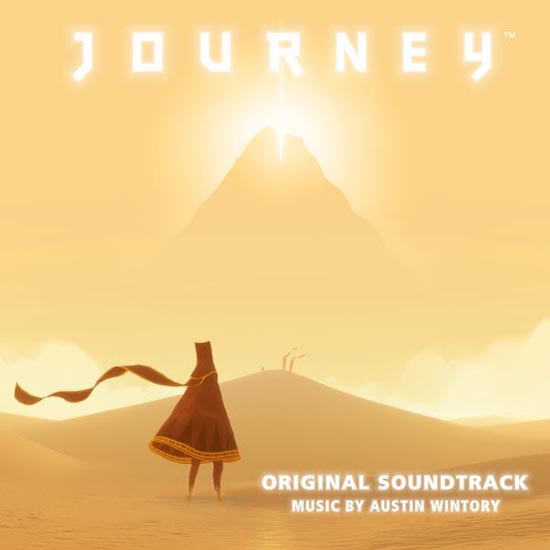
This man entered my radar only this year, but I pray that he will never fall off. I could contend that that if you want an absolutely beautiful, emotional experience that is both complex and accessible, you will get the soundtrack to Journey. On top of a superb game, Wintory's soundtrack is maybe the deepest experience you could have via a single video game soundtrack. It is a journey in and of itself, and upon the epic arrival of "Apotheosis," life just feels complete. The composition of that song rises and rises almost endlessly until it plateaus at the apex of your aural desire. It is a truly unfathomable song and album. I bought the soundtrack to flOw out of curiosity, and while it maintains a much simpler atmosphere, it contains "Gratitude," which seems like a taste of the greatness Wintory has yet to unleash on the world years later.


Kow Otani
What I have heard: Shadow of the Colossus

There is nothing else to hear, honestly. Whereas Shadow of the Colossus presents so many arguments for the idea of video games as art, the soundtrack acts as the pedestal for every point you could bring up. Fighting a colossus ultimately becomes synonymous with the dramatic rise of a wild string orchestra, whose strings switch to victorious themes as soon as your sword penetrates the flesh beneath each glowing symbol you encounter. It is hard to choose a favorite, but I love the flurry of "A Violent Encounter." It usually stands as my great example, but it's unfair to choose. "A Despair-filled Farewell" features an almost crying horn that adds to the emotional realization that you spend the game killing majestic beings. And something begins to swell within me as soon as I hear the bells chime in "Epilogue ~Those Who Remain~," which backs the credits as the player observes the fallen heaps of his or her own handiwork. Seriously, this soundtrack is indescribably memorable through and through.


Rei Kondoh
What I have heard: Okami, Bayonetta

Rei Kondoh is definitely not the only composer on these humongous 5-disc soundtracks, but his songs remain the most memorable to me. I have a huge penchant for the dramatic, as I have said, and Rei fits the bill. I loved every minute of Okami, but I think I first took notice of the soundtrack during "Giving Kushinada a Ride," which plays as a beacon of strength during a time in the game when everyone has succumbed to the sad fate of one of the characters. The listener can feel that important heroics are afoot, and this song narrates the journey towards facing one's fate admirably. From the same soundtrack, "The Sun Rises" oddly makes me a bit teary-eyed. Following a suspenseful moment near the end of the game, it acts as a reprise of the game's main theme, but mixes it into a triumphant ballad that defeats evil with its notes alone. The Bayonetta soundtrack was notably all over the place in terms of style, but many of the booming tracks were composed by Kondoh, including all of the insane choirs that play during the epic boss fights. My favorites are near the end, though. "You May Call Me Father" backs an incredible battle as Bayonetta falls from the top of a huge skyscraper, and "The Greatest Jubilee" bears a sound as big as the universe as she fights to save it. These two tracks stand out for me because in contrast to the other boss themes, the choirs get notable reprieves from screaming their lungs out during a few movements, which makes their alarming return all the more deliberate and disquieting. If it would stir things up, I'd let Rei Kondoh conduct the choir at my funeral.


It does appear my passion for this post has gotten the better of me, so I will continue with a second part tomorrow! I do hope you're going and buying all these things, by the way.

(Part II can be found here.)


Images taken from Amazon, iTunes, and other Googled sources.