Showing posts with label Assassin's Creed. Show all posts

Tuesday, December 11, 2012

Assassin's Creed III Review

Running, Jumping, Climbing Trees, Killing Blokes While You're Up There

This should reveal enough about the new setting for you.
The Assassin's Creed franchise has come a long, long way since the first game came out in 2007. Still, it would seem rather strange to new players that with four previous console releases and three portable that the latest entry would carry the "III" on the end. Now that Ezio Auditore's adventure is finally over, Ubisoft saw fit to end the side stories and usher in a new assassin, Connor Kenway, to carry the adventure along to its first numbered entry in years. However, compared to the innovation Assassin's Creed II ushered in compared to its predecessor, this entry leaves me questioning if more couldn't have been done.

The story takes place in the colonial American countryside, particularly the area between Boston and New York, before and during the American Revolutionary War. As a citizen of the United States, I will admit I could not help but be charmed by participating in so many historical moments even though I am not much of a history buff myself. It is just nice to add the game's secret layer on top of things, I suppose. After a twist near the beginning of the game, Desmond, the overarching protagonist of the series, gets to control Connor in the past as he races in the present to find a way to prevent the end of civilization as he knows it on December 21st, 2012. Connor is motivated by the desire to protect his native American tribe from the dangers that threaten them, and finding out a Templar had a hand in a tragedy he experienced is enough to embroil him in the assassin cause.

Despite the set up of the previous few games, the assassins' brotherhood is all but dissolved, and Connor makes a lot of effort to rally the local colonists to join him. I do not want to ruin any major plot points, but by the end of the game, there isn't the same sense of satisfaction as there was present at the end of Assassin's Creed: Brotherhood when Ezio gained the support of the beleaguered Roman citizens. This might be due, in part, to the fact the Connor's cause piggybacks on the colonists' cause and not vice-versa. Though early interviews suggested he would remain neutral, enlisting the help and ire of both sides, the story proves this wholly untrue by siding entirely with the colonists. While it doesn't make his cause more worthy of my time, the efforts of the writers to blur the lines between right and wrong ultimately shine as each Templar's death reveals more dogma highlighting the flaws in the assassins' and Connor's fights. For the first time, the Templars have something worthwhile to say, and the confusion they cause finally establish them as the perfect antagonists whereas they were just blindly evil in earlier entries.

Get in line. I have all day.
There are only subtle hints to this dilemma in the story that takes place during the present day. After the end of the previous game, Desmond and his rag tag group of assassin pals are on the last leg of their journey to stop end of the world. Demond's father also joins the team if only to provide the unbelievable trope story of the father who isolated his child for a higher cause but proves his love after being forced to work together. You will ultimately not care how these two feel for each other, and the other two characters, short their other friend since Brotherhood, still make no effort to be interesting despite the player's opportunity to talk to each while outside the animus. If anything, Shaun Edmonds, the English tech whiz who writes the database entries, manages to make himself utterly deplorable through constant condescension and double entendres written into each paragraph. Actually, scratch that, it ceases to be a double entendre once you write, "penis." Then, it's just crass and unfunny.

Off to gameplay, something new thrown into the fray is the ability to climb the many mountains and trees in each environment. After doing so for only a handful of minutes, you will quickly become convinced that there's no going back to simply climbing building facades. Navigation has also been streamlined to become much simpler, acknowledging both the actions you'll do often and the actions you'll intend to do in certain contexts. Running is made possible by holding the "high profile" button alone and a direction on the left thumbstick, no more holding the "feet" button. Connor also automatically will push people aside, showing the developers finally learned there is no time you will try to run into a crowd and purposely wish to trip over the people.

Combat has also been made a touch more interesting by adding more actions to perform to counter foes. Moved to a different button, the counter sequence allows players to kill, disarm, or throw enemies around, though not all enemies are susceptible to all actions...only most. New weapons have been added to the fray, including guns that require reloading delays, a bow and arrow, and a rope dart that allows Connor to hang enemies in various ways. Being a native American, Connor also carries a tomahawk at the outset, which peculiarly bears the assassin insignia, but that's part of a larger narrative puzzle. Like previous games, there are different classes of weapons to carry around, and the player has the ability to steal bayonets off of soldiers, which act both as firearms and the series' form of spears. It is easier to be more aggressive in battle, especially since your actions are no longer dependent on holding the "high profile" button, but you will still find yourself dependent on waiting as you are attacked one at a time by each soldier if only to watch the fantastic counter animations. It is both a shame and a constant source of entertainment.

What a nice hat, right?
My favorite new addition to the gameplay was a complete shock, actually. Connor is given the opportunity to command a frigate on the open seas replete with crew and weaponry. Not only does traveling on the water reveal some of the most beautiful and versatile environments in the game, but battles are awesome departures from what is mostly the same game you've been playing since 2009. Unlike the atrocity that the tower defense game of Assassin's Creed: Revelations was, you will not purposely do everything in your power to avoid completing these extra tasks. Like your character, the ship you command is fully upgradeable  and relatively easy to control. Of course, the rules are different out on the water than when fighting one-on-one, but the designers managed to take artistic liberties to keep battles fun and in the player's favor without being a cakewalk. It also comes with a reasonable backstory, something I've complained about before.

Assassin's Creed III carries over the optional objectives of the previous games' missions, but to add more depth, most missions, including some side missions, have multiple objectives to try to complete. I appreciated the majority of these because some of them compel you to play differently from how you intended, and they test out all aspects of the new skills the game has taught you. Moreover, not all optional objectives are revealed at the beginning of each mission. Instead, they are tied to checkpoints, so if you need to backtrack a little, you won't lose what you have already completed in the first half or third of a mission. Unfortunately, this new system is not without drawbacks for completionists (let's not kid ourselves to think that this has any bearing on anyone else). There will be a number of annoying times when a new objective is revealed during an action sequence with little opportunity to look in the corner of the screen to read them, resulting in missed opportunities and more backtracking. Also, a few missions carry optional objectives that are either insane or made practically impossible to achieve due to flawed design. While most of these task the player with thinking outside the box, all the ridiculous ones task the player with doing things no one, assassin or commoner, would do to achieve a goal, certainly not with such specificity. I did finish the last mission with 100% of these completed but a stupid amount of my time devoted to the effort.

In keeping tradition since Ezio threw his first punch, the game is loaded with additional activities to pursue. Instead of upgrading a village or city, Connor is tasked with rebuilding a section of the frontier, dubbed the Homestead. Instead of dumping money into every building type to gain a regular allowance, there are now characters to find, save, and invite to live and thrive on the once-forgotten section of land. Each mission not only has a small story attached to it, but eventually the stories intertwine as the citizens of the Homestead believably grow to care for and support each other. And it all comes to a head in a remarkably satisfying way for a side quest that is not downloadable DLC. Completing the Homestead missions results in material gatherers and artisans becoming available to Connor for a number of purposes, and fulfilling multiple tasks for the same villager results in him or her becoming more useful. Along with assassination and courier missions littered about the game's main areas, there are also delivery requests for items only the villagers can craft.

There's a perfectly reasonable explanation for this.
Furthermore, as you come across shops, you can utilize your Homestead to trade crafted items for additional funds. The interface for crafting and trading, unlike the rest of Assassin's Creed III's UI, is disappointingly clunky. The are many items to sift through, and every time you are done with whatever you have selected, either an item you crafted or an item assigned to a trading slot, going to select the next item requires going through all the categories and linearly arranged lists again. This becomes tedious almost immediately, but it is necessary to persist in order to make enough money to afford all the extra baubles and upgrades the game has to offer. I could go on forever, but there are also land convoys to attack (templar) and defend (your own), animals to hunt and skin (more convincing than Far Cry 3 by miles), treasure chests to loot (with a silly minigame), forts to capture for the colonies (available before you even know you're on their side), citizen missions tied to assassin recruiting, underground networks to explore (a weirdly compelling time sink), and tall buildings and trees to climb, of course. In addition to the activities the frontier has in store for you, Desmond's story features a handful of present-day missions to retrieve power cells to power the ancient machinations he comes across. Not only are they reasonably fun missions, but they test the player's skill by featuring confrontations without the useful icons and indicators that assist with countering.

All the features and activities come wrapped up in what is a pretty package in its presentation but mangled by its execution. Real weather is the shiny new coat on Assassin's Creed's familiar appearance, and it adds an enjoyable layer to exploration. On top of day and night cycles, the passage of time is represented through changing seasons with the most notable shifts happening between winter and any of the others. Rain makes surfaces credibly slick, and trudging through the snow not only inhibits on-foot navigation, but it does so convincingly despite the fact that our hero never freezes even if he takes a dip between land masses. For me, the time period's saving grace is the abandonment of terra cotta roofs covering buildings composed of boulders. Instead, brick and wood are welcomed materials to hear under Connor's feet as he tramples houses in pursuit of the next objective. Hopping between rooftops in the snow with the masses walking below you is sometimes breathtaking in its beauty and complexity. Animation continues to be top notch as characters move in astoundingly versatile ways, and the number of NPCs on screen has been increased enough that the cities really feel full of life. It also enhances the handful of missions that take place during large-scale battles in America's history, and navigating huge battlefields and countless soldiers is memorably exciting.

Regardless of how everything looks, there are still technical hiccups to surmount. The most egregious offender is the horrific texture pop-in that takes place upon entering almost any area. There were times I would just wait almost a minute as muddy stand-ins finally rendered into houses and trees for me to traverse, that is, if the game didn't keep me frozen in place while I waited. The fast travel system has been streamlined so that one need only access the map and zoom in and out to go practically anywhere, but all this waiting seems to counterbalance the new ease. Moving on, sometimes the AI just acts strangely, and this is excepting battle instances where Regulars more or less line up to die. You'll enjoy chasing someone who forgets you're trying to kill him when something walks in his way, people who talk to you without looking at you or staying nearby to be heard, soldiers who don't notice as you tear down your notoriety posters in front of them (this might be purposeful, but it doesn't make any sense), duplicating NPCs who speak and move in uncanny synchronicity, and of course, all those times your assassin either makes a stupid platforming decision due to imperfect camera tracking or when he just decides to run up a wall to no avail despite a nearby handhold. I want to defend the game for all its fun distractions and compelling missions, but you can't help but imagine what an extra year of development would have yielded. Let's not kid ourselves.

So badass, he can run through war unscathed.
But you're not playing the game simply to have fun. You are a fan and you want some resolution! Ezio and Altaïr got theirs in the last game, and it's time for Desmond to achieve whatever's he's been working towards all this time, right? Well, his story along with the threat of the apocalypse do wrap up, but they do so in a manner that forces the player to ask too many new questions for it to be satisfying. I could've gone for a greater sense of accomplishment after all Desmond and I have been through together (including his weird face lift between Brotherhood and Revelations). Connor's story ends in a more fulfilling manner even if it does stretch the limits of credibility to get him to the conclusion successfully.

Sadly, the story surrounding Connor is more interesting than he is. Whether it is his voice actor, the script, or a mixture of both, he is a needlessly aggressive and argumentative protagonist given the opportunity to be the savior to an infamously oppressed set of people. His conversations with others are generally uncomfortable, and I couldn't help but feel annoyed that the first native American character I've had the opportunity of playing as becomes the first hero in this series I've had enough of after one game. I actually find it amusing that the spoiler-laden launch trailer for Assassin's Creed III features Connor stating, "It is time for the world to know my name," when in fact, his actual name is left at the beginning of the game due to its supposedly challenging pronunciation. The character is flawed, but not in a worthwhile way, and his rich heritage is never embraced in a respectable way. Thus, it's also a learning opportunity completely missed unless you peruse the exhaustive database.

All in all, Assassin's Creed III, is a fun time sink with many bothersome flaws. The added navigation possibilities, weather effects, NPCs on the screen, and other design features coupled with the more streamlined controls add up to a more enlightened game for fans of the series, but it comes with the added acknowledgement that all of these things belonged in the earlier games. Basically, compared to the leap the second numbered entry had over the first, the game we all waited for with a "III" in the title only adds some very nice and necessary touches to a familiar coat of paint with the only standout being the naval missions. It tries to get away with adding a new character while closing out the story of another one, but it ends up being a facade. Fans will want to know what happens and will still revel in the familiar gameplay, thankful for the tweaks. Newcomers will be baffled by the story enough to not want to bother dipping their toes in the pool, not that Connor does much to convince them otherwise. It adds up to a game I really, really enjoyed playing due to its familiarity but was continually aware that I've enjoyed other, more recent games a little bit more because of the new elements they brought to the table. I look forward to the next entry, and I can only hope with futility that Ubisoft will actually take the time to catch up.

All images obtained from Game Informer.
I'd also like to note that the subheading to this review is a reference to the amazing Dress to Kill comedy special by Eddie Izzard.

Monday, December 3, 2012

Far Cry 3 Review

Cool Jungle, Bro

One of the beautiful sights of Rook Island
I must say that I've developed quite a fondness for sandbox games. Whereas some people are paralyzed by the ton of things to do, I become obsessed with trying to do all of them. Far Cry 3, developed by Ubisoft, was honestly not on my radar, but I was given the opportunity to try it out. Let me tell you, this game is a lot of fun, and if you're looking for yet another game to scratch that sandbox itch, there is really no way to go wrong with this game.

I'll start with what is the weakest element of the game so far, which is the story. The main narrative begins with with a group of friends vacation in the Pacific islands somewhere, and they end up skydiving over Rook Island. It seems their landing was rockier than normal because it landed them in the grips of a drug and human trafficking ring of pirates somehow, managed by the intense Vaas Montenegro. After a bungled stealthy escape attempt, the game's hero, Jason Brody, manages to run for his life through the jungle before he passes out. A man residing with the local Rakyat rebels, Dennis, saves you from certain death and tries to empower you to save your friends and support the local cause. He simply sets Jason off on his quest into the dangerous jungle. As Jason points out to him, he's never even shot a gun in his life, but so goes the story of a bro who becomes a hero. (Hebro?)

After finishing some introductory steps, the whole of Rook Island becomes Jason's oyster to crack. Along with following the story, there are a number of side activities to follow. First, in similar fashion to the Assassin's Creed series, climbing to the top of radio towers reveals portions of the map to better navigate the terrain and find secrets, and there are many secrets. Chests containing ammo and money, ancient relics, memory cards with pirate logs, and letters from WWII are littered all over the island. Next, there are outposts in every square area of the map; by overtaking these areas for the rebels, the amount of enemies reduces making the majority of that section relatively safe for passage.

There is nothing creepy about this scene.
The game even rewards Jason with more XP based on how stealthily these outposts are claimed. As much as I enjoy this, given my preference for stealth, I can't help but feel bad for the players who prefer to waltz in with guns blazing. The game even rewards you for stealthy takedowns better than normal shooting. Still, taking over these areas are fun, and when you're done, they become fast travel points replete with a locker that acts as a mini-shop and extra sidequests including assassination missions and rare animal hunting. What remains baffling still is that when you're done, the local rebels drive in with a handful of guys holding machine guns. Almost all the rebels hold machine guns. Why can't they take over these places themselves? Better yet, why can't you recruit them to help you? The connection is so obvious there.

Personal progression through the game is represented by a strange tattoo involuntarily given to Jason early in the game. Utilizing a skill tree system with three branching paths, as you learn skills, the tattoo grows down your forearm, a symbol of your growing skill as a warrior. Great games have great skill trees, and this one is no exception with unique abilities like kicking an enemy away from you as you pull his grenade clip or taking down a guard stealthily and using his knife to kill another one. However, those great skill trees don't always need great backstories, and this tattoo, which grows on its own without ink, only has a ridiculous explanation. Circling back to the story, this ultimately makes Jason's story of a simple partying twenty-something turned guerilla warrior seem like it could only possibly appeal to the already empowered single heterosexual white male audience that most video games are already marketed towards. It's a rather shameless plea for their rapt attention. You can already imagine Jason's friends after the end game going, "Cool tat, bro!" For a game that is enough fun to appeal to anyone, it is sad to have a sellout protagonist geared towards a niche demographic. That said, to Jason's credit, he is not silent in a story that demands he speak up, one of my gripes with Dishonored before.

Back to the good, though, Rook Island bears one of the most fascinating terrains I've explored in video games. The designers really went through a lot of trouble to create a huge area that is actually believable as a setting. With only endless waters surround Rook Island as a hidden wall around the whole setting, the environment  of Far Cry 3 is really yours to travel and have fun with. The terrain has many elevations ranging from tall mountains to underground caves. Every time I found a waterway that led to the middle of the land via a winding cave system, I was in awe. However, getting lost is not really an option. The map allows you to set way points to any objective, outpost, or mission, and the minimap is handy enough to help you navigate the local terrain without popping open the main map too often. I think it could afford to have mulitple zoom options (like the one in Grand Theft Auto IV), though, which would help with fast driving segments over and around hills where you can't see the road ahead too well.

Seriously, look at this.
Along with the varied topography, Rook Island features equally varied wildlife populating the area. As I said, you are given missions to hunt some of these animals, but otherwise, they are roaming free waiting to be picked off. Although you are not rewarded with any XP for the endeavor, the game features a crafting system that utilizes the hides from the deer, boars, tigers, and whatnot wandering in the wild. At the beginning of the game, Jason's ability to carry ammo and money is limited until he can craft larger carriers for all his stuff. Each time you craft an item, the next size up usually requires the hide of an animal in a completely different section of the island, which encourages more exploration and risk taking.

Also in each area are different color classes of flora, which Jason can use to craft syringes that enhance his performance (ahem) and abilities. I won't deny that all of these systems are useful and provide more fun to have in this well-developed game, but once again, the writers ask me to suspend a lot of disbelief. Jason is immediately knowledgeable in the art of hunting and skinning an animal, though his grunts of disgust never dissipate regardless of how often he does it. Slicing leaves off of plants is an easier skill for me to believe he can figure out on his own, but his willingness to shove syringes in his arm repeatedly tells me that he should've been in rehab instead of traveling the world. Oh, and this is all without going into his divinely conceived recipes and crafting diagrams for this stuff. And can anyone explain why he needs two deer hides to make a so-so wallet, but he can't craft a larger wallet with either more deer hides or better utilization of large hides? How does he know he needs a tapir? Has he ever seen one before?

Far Cry 3 features a plethora of weaponry to fit your killing desires. On top of covering essentially every class of firearm you could desire, it also feature multiple types of each, including a bow and arrow to make you feel like Rambo. (Rambro?) Then, if that doesn't sate you, you can purchase attachments to modify almost each gun to your liking, such as better sights and silencers. I have never played a game carrying an arsenal of bow and arrow, silenced sniper rifle, and silenced assault rifle before, but it makes me feel awesome. If the price for any high class weapon seems prohibitive, climbing the aforementioned radio towers and reestablishing radio access to the locals opens up higher classes of weapons for free. With all the XP and money you can earn from sniping random pirate camps and the like, this game is practically giving you more power away for little effort. It could probably afford to be a little more restrictive with the weapons, but I can't complain while I'm having fun accomplishing my tasks with deadly accuracy. The only problem is the backstory with the skills designates that until you reach a certain point in the main narrative, you will be stuck a limited set of skills to unlock and a surplus of skill points waiting to be spent. I personally recommend breezing through the story at a quicker pace to make the skill tree more accessible sooner.

To accompany the continuously fun gameplay, the graphics are really gorgeous. Not simply a console port, the settings allow players to really ramp it up and make it look quite lush. Admittedly, since The Witcher 2, this is the first game in a while that I couldn't run on max settings without sacrificing playability, but even on lowered settings, the game looks really good. An additional bonus is that human and animal character models all look good and animate believably, though the game suffers from the common trope of giving the most discernible details to the main characters, leaving the citizens of Rook Island to live with doppelgangers meandering about.

The majority of textures look good and are fairly passable up close, i.e., I did not focus on muddiness like I do in other games. The plants are all gorgeous from afar, too, but hiding in a bush does reveal the cracks in the rendering work. I should also mention that I experienced zero texture pop-in. The soundtrack varies from tribal to techno, which is all fitting without any one song standing out from the rest. Voice acting is all handled well and words generally match lip movements on all characters and NPCs. What is confusing is that the locals and rebels all speak Malay convincingly  but when it comes to English, they vary between a Pacific Islander accent and a Kiwi accent, going so far as to occasionally say, "Kia ora," when Jason passes by. I don't get it, but it's a detail the majority of gamers won't be bothered to notice.

Your digital camera acts as a way to tag and track enemies. Also, you can just look at the graphics better.
Control in Far Cry 3 is fairly comfortable with a typical mouse and keyboard setup on the PC. Most elements react well to input. The worst offender seems to be driving vehicles, where using a keyboard clearly lacks the nuance afforded by a controller with thumbsticks and pressure-sensitive trigger buttons. There is essentially one gear, and it's pedal to the metal. Also, the game allows you to maneuver the camera while driving, which I don't suggest doing ever because you'll drive off a cliff and not know why. In that regard, the game is a lot like real life! Another navigation gripe is the game's sensitivity to walking over small edges. I complained about something similar in Borderlands 2, but here it rears its ugly head in the silliest areas, requiring you to literally jump through doorways to proceed inside a house. Jason's ability to climb ledges is restricted to ones with overhanging ropes or vines that he doesn't actually use as grips despite their presence. Coming off of Dishonored, with the best first-person platforming ever, I found it jarring.

Finally, the game is a little too particular about the exact angle and distance at which you can interact with objects, such as found money and bodies to be looted. You have to be the in a precise position before it'll prompt you to do anything. This also emulates real life but in an unpleasant way. With all the money to steal and bodies to loot, you just want to grab and go. The worst culmination of all these came when I wanted to open a chest on a porch. I could not walk right onto the porch, of course, but the roof over it was too low for me to jump onto the porch. However, the extra foot the edge of the porch set me away from the chest prevented me from opening it. I had to climb nearby stairs on the other side of the house, jump onto and over a lounge chair placed at the corner, and maneuver myself to the chest that way. Imagining this scenario in real life yields only puzzlement.

Regardless of all these meaningless faults, I must reiterate that Far Cry 3 is a ridiculous amount of fun. The narrative notwithstanding, you will just have so much fun actually playing the game. The sandbox style is remarkably rewarding, and it affords you to have a very meaningful time doing nothing important. There is just the right amount of things to do written into the gameplay, and there are enough enemies, animals, and caves to pursue in between these moments. Combat is fun and provides a silly amount of options to play the way you want. Even as frustrating as it is to hear a tiger growling right behind you while you are picking off a pirate base one guard at a time, it's these unique moments that separate the game from others. I don't know what else I can tell you. Go play it!

Images obtained by playing the games through Uplay through Steam. It's like video game launch Inception.

Thursday, August 16, 2012

Music: I Love Video Game Soundtracks, Part I

No, really, I'm serious.


My first video game soundtrack was Burn: Cycle, composed by Simon Boswell. The PC version of the game came with it by default. (By the way, does anyone remember the CD-i?) Be that as it may, it only ignited a small flame within me that would not rage into a fire for many years. Still, there were a few other notable additions to my soundtrack collection until it became a full-on obsession. I was among the small population that owned a Sega Saturn, which I purchased mainly for NiGHTS into DREAMS. I loved the game, but somehow or another, I discovered that the themes to all the boss battles, not the level music, were accessible via a regular CD player. That said, it meant I could eventually rip the music onto MP3 format once that became popular. The next game I could do this for was Earthworm Jim 2, which was composed primarily by Tommy Tallarico. That soundtrack was a double bonus because it contained some awesome tracks from him, but it also had the 3rd movement of Moonlight Sonata (Beethoven), which I think is the best movement.

It wasn't until Myst III: Exile did my interest truly get sparked. The theme to that game really opened my eyes to the potential a game soundtrack could possess. It also spoke to me directly as I have a rather exploitable love of songs that start small in production but become booming choral masterpieces by the end. Thus, Jack Wall created the standard by which I would judge future soundtracks, and the next one I would actually own would be Myst IV: Revelations, whose main theme is an awesome tribal piece done with a choir in 7/4 timing. However, it was hard to maintain just one composer to love as time went by.

Stepping back a little to the year, 2000, that is when I played Final Fantasy VIII on the PC. While I wouldn't own the soundtrack for a number of years, I think many gamers around the world are with me when I say this: "Liberi Fatali," the opening theme to the game, is a masterpiece on par with "Carmina Burana" (Orff) in terms of drama and fantastic choral work. I must have started a new game about 50 times either to watch the opening sequence myself or to show it to others, and it always solicited a "wow" response from my friends.

Well, these are my origins, but I won't go into every single inspiring soundtrack I've come across. There are probably many more I forgot or cannot access anyway. What I will focus on is the composers and their soundtracks or notable songs. I have played the games corresponding to each of these, and I honestly feel that your ears are missing something by not having access to some songs.

(In no particular order.)

Jack Wall
What I have heard: Myst III: Exile, Myst IV: Revelation, Mass Effect, Mass Effect 2, Jade Empire

I already stated that I love him. You may have never heard of Myst III or IV (did you know there were sequels to Myst?), but I'll tell you what you have heard of: Mass Effect. He was lead composer on the soundtracks for both Mass Effect and Mass Effect 2, and he did just as much of an amazing job on both. They both possess arguably different sounds to match the narratives they back. Mass Effect has more of the sci-fi edge to it with a lot of notable synthesized sounds, but it also possesses a lot of drama. Songs like "Breeding Ground" and "Exit" are sweeping pieces that invoke memories of the exciting missions you encountered throughout the game. On a tamer note, though, "Uncharted Worlds" and "Vigil" have become iconic and hauntingly beautiful themes carried throughout the entire series, invoking a sad peace among the chaos of the larger story arcs. With Mass Effect 2, the focus shifted to the characters themselves, and they each have a theme. Starting with "The Illusive Man," which sets a haunting tone for one of the most notorious characters, the soundtrack almost serves as the narration itself. Listening to the undulating brass work on "Jacob" or the cries of the vocalists on "Samara" easily take you back to their characters and the missions you performed for and with them.

Sam Hulick, Sascha Dikiciyan, Cris Velasco, Chris Lennertz
What I have heard: Mass Effect, Mass Effect 2, Mass Effect 3

Although I would love to sing only Jack Wall's praises for the Mass Effect soundtracks, I simply cannot. He did not work alone. All of these composers created notable tracks across all three soundtracks. It's also worth noting that the Sonic Mayhem duo, Sascha Dikiciyan and Cris Velasco, did all the music to the Kasumi's Stolen Memory DLC, and Chris Lennertz composed the wildly dramatic scores to Overlord and Lair of the Shadow Broker DLCs.  Sam Hulick's notable contributions were on the Mass Effect soundtrack, where he composed the awe-inspiring theme for "The Normandy" and the victorious "From the Wreckage." Thus, it's worth mentioning that the game basically begins and ends with Sam Hulick. Just sayin'.


Jesper Kyd
What I have heard: Assassin's Creed, Assassin's Creed II, Assassin's Creed: Brotherhood, Assassin's Creed: Revelations, Borderlands, Darksiders II

To me, Jesper Kyd was reinvigorating. Listening to his work made be super passionate about video game soundtracks all over again. At this point, he is mostly known for his work on the Assassin's Creed series and with good reason. Whereas the first game's soundtrack was impressive, with sweeping themes for the various Middle Eastern areas, such as "Flight through Jerusalem," his command over the audience comes with the opening triptych of Assassin's Creed II. If I could recommend three songs that belong together to play on repeat, it would be "Earth," "Venice Rooftops," and "Ezio's Family." Through them, he establishes a musical theme that would carry through the game via various instruments and voices. It manages to be memorable while subtle at the same time. These acclaims aside, it is the entirety of the Assassin's Creed: Brotherhood soundtrack where Kyd shines, and it is due to the excellent percussion work. There is so much variety in the percussion here, from the sounds of marching in "Flags of Rome" to the almost heart-like pounding of "Borgia Occupation," which sadly disappears from the game once you've successfully captured all of Rome for the assassins. Although I am still listening to it, I would like to assure the video game world that the Darksiders II soundtrack is arguably an even greater tour de force embodying so much variety and interest in its double-disc size.


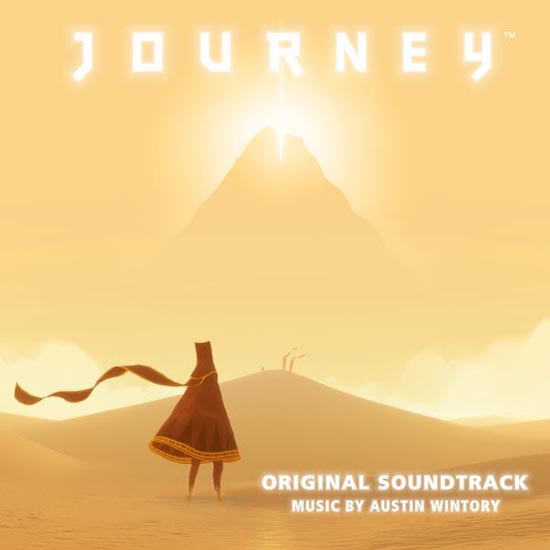
Austin Wintory
What I have heard: flOw, Journey


This man entered my radar only this year, but I pray that he will never fall off. I could contend that that if you want an absolutely beautiful, emotional experience that is both complex and accessible, you will get the soundtrack to Journey. On top of a superb game, Wintory's soundtrack is maybe the deepest experience you could have via a single video game soundtrack. It is a journey in and of itself, and upon the epic arrival of "Apotheosis," life just feels complete. The composition of that song rises and rises almost endlessly until it plateaus at the apex of your aural desire. It is a truly unfathomable song and album. I bought the soundtrack to flOw out of curiosity, and while it maintains a much simpler atmosphere, it contains "Gratitude," which seems like a taste of the greatness Wintory has yet to unleash on the world years later.


Kow Otani
What I have heard: Shadow of the Colossus

There is nothing else to hear, honestly. Whereas Shadow of the Colossus presents so many arguments for the idea of video games as art, the soundtrack acts as the pedestal for every point you could bring up. Fighting a colossus ultimately becomes synonymous with the dramatic rise of a wild string orchestra, whose strings switch to victorious themes as soon as your sword penetrates the flesh beneath each glowing symbol you encounter. It is hard to choose a favorite, but I love the flurry of "A Violent Encounter." It usually stands as my great example, but it's unfair to choose. "A Despair-filled Farewell" features an almost crying horn that adds to the emotional realization that you spend the game killing majestic beings. And something begins to swell within me as soon as I hear the bells chime in "Epilogue ~Those Who Remain~," which backs the credits as the player observes the fallen heaps of his or her own handiwork. Seriously, this soundtrack is indescribably memorable through and through.


Rei Kondoh
What I have heard: Okami, Bayonetta

Rei Kondoh is definitely not the only composer on these humongous 5-disc soundtracks, but his songs remain the most memorable to me. I have a huge penchant for the dramatic, as I have said, and Rei fits the bill. I loved every minute of Okami, but I think I first took notice of the soundtrack during "Giving Kushinada a Ride," which plays as a beacon of strength during a time in the game when everyone has succumbed to the sad fate of one of the characters. The listener can feel that important heroics are afoot, and this song narrates the journey towards facing one's fate admirably. From the same soundtrack, "The Sun Rises" oddly makes me a bit teary-eyed. Following a suspenseful moment near the end of the game, it acts as a reprise of the game's main theme, but mixes it into a triumphant ballad that defeats evil with its notes alone. The Bayonetta soundtrack was notably all over the place in terms of style, but many of the booming tracks were composed by Kondoh, including all of the insane choirs that play during the epic boss fights. My favorites are near the end, though. "You May Call Me Father" backs an incredible battle as Bayonetta falls from the top of a huge skyscraper, and "The Greatest Jubilee" bears a sound as big as the universe as she fights to save it. These two tracks stand out for me because in contrast to the other boss themes, the choirs get notable reprieves from screaming their lungs out during a few movements, which makes their alarming return all the more deliberate and disquieting. If it would stir things up, I'd let Rei Kondoh conduct the choir at my funeral.


It does appear my passion for this post has gotten the better of me, so I will continue with a second part tomorrow! I do hope you're going and buying all these things, by the way.

(Part II can be found here.)


Images taken from Amazon, iTunes, and other Googled sources.