Showing posts with label Mass Effect. Show all posts

Tuesday, February 12, 2013

Jade Empire Review

Like an Open Palm to the Head

When citizens complain about a lack of street lighting, they don't usually mean all in one place.
Despite the number of games I've played which have come from Asia, I have only played two whose stories take place in Asian settings: Okami and now Jade Empire. The latter is surprising considering BioWare is located in Canada. Also, considering the controversy BioWare ignited in 2012, it may come as a surprise to many gamers that they created an RPG once that was not Mass Effect or a Star Wars derivative. I once started Jade Empire a few years ago but ended up abandoning it for reasons I cannot recall, but it might have had something to do with the difficulty. Thus, it ended up in my backlog again, not to arouse my interest until almost eight years after its creation. Regardless, I have been digressing for an entire paragraph now.

Jade Empire's story takes place in a fictional ancient Chinese setting whose name you can guess by now. You are given the opportunity to choose from a variety of male or female player characters, but they are not customizable in appearance whatsoever, just character stats. No matter whom you choose, the story is the same, and only a handful of interactions with NPCs and your romance options are affected by the gender. The player character begins the tale at a martial arts school up in the mountains in the village, Two Rivers. Here, you are Master Li's very special student with an important destiny that is continually alluded to during the introductory act. Eventually, the village and the school are attacked, your fellow students save for one, the spirit medium Dawn Star, are slaughtered, and your master has been kidnapped, presumably by the Empire's minions. So begins your empire-trotting tale to learn your destiny and save your master. If I sound sarcastic about having a wunderkind player characters, it may be because I think it's cooler to find out you're special than to have everyone at the beginning of the game remind you ad nauseam.

If you thought cell phones were huge way back when, get a lot of this coffee maker.
Overall, the story is a mixed bag. The setting and the folklore behind it are the most impressive qualities with just enough magic to make it intriguing without delving too far into high fantasy. The result is a believable land with strong traces of ancient mysticism and gods. Along your journey, you will also meet plenty of unique characters, which add to the rich setting with personal tales of strife and triumph, some of whose outcomes to affect through side quests. A number of pre-designated characters also join you on your quest and assist you in battle. The main narrative, which drives the player along, is just OK, though. Nothing is thrown at you that you've never seen coming, though the laudable twist is handled gracefully. Where the story fell short is in the rather brief cluster of chapters that make up the conclusion to the game after the twist in the fourth act. It feels like the developers felt a need to pad the time until the ending, so they just threw in some repeated areas with almost none of the exploration or the side quests offered by the first three quarters of the game. To top it off, your time is extended needlessly with battles of escalating difficulty instead. The pay off for your troubles is an extremely brief cutscene with the final boss followed by text explaining what became of your companions. I now question whether or not BioWare ever really knew how to wrap up a storyline.

That said, Jade Empire is still enjoyable to play; I clocked in about thirty hours of gameplay between the main quest and all the side activities. Before the crux of the narrative even comes to pass, Two Rivers offers a number of optional missions to complete, which net you bonus experience and money to really start prepping yourself for the challenge ahead. These are but a taste of the deeper, more relatable side quests that you encounter during your travels around the Jade Empire. Unsurprisingly, the game features a binary choice system where good is called The Way of the Open Palm, and evil is called The Way of the Closed Fist. Although one character argues that neither path is inherently imbued with good or evil, the system's implementation is pretty rudimentary. Open Palm is colored blue, and Closed Fist is colored red. I need not explain further. However, the methods behind gaining favor with either path are varied. Depending on your character's stats, you are able to influence NPCs into doing what you ask of them using charm, intuition, or intimidation. The leanings are situation dependent, but even if you're not being intimidating, it can be obvious when you're trying to convince someone to do something that is ultimately not right, so don't be surprised when you get that red glow about you. Killing folks with abandon isn't the only evil action to take.

We're all done freaking out about this kind of natural phenomenon, right?
The experience you earn from completing quests and doing battle allow you to upgrade your three main stats: body, spirit, and mind. Increasing these influence the bars for your health, chi (magic), and focus (weapon dexterity), but the three unique combinations of each affect your level of charm, intuition, and intimidation for conversation. Battle is focused on using an impressive array of fighting styles – martial styles involve physical attacks with your limbs, weapon styles need no explanation, support styles inflict status effects but no damage, magic styles allow for a bit of ranged fighting and status effects, and transformation styles allow you to turn into a powerful but chi-draining spirit. Not every style works on every type of opponent, either, so it's necessary to stay on your toes when fighting varied groups. Each level you earn also nets you points to apply to improving each of these styles to become truly powerful. The variety of styles you earn or buy during the game outnumber the amount you can bring into battle (10 on PC, one for each hotkey), so you should have no trouble customizing battles to fit your own perception of your ultimate martial arts fighter. I really enjoyed this aspect of combat, and I only wished there was an option later on to reallocate skill points to newer skills you wish to replace older ones with. This is a minor complaint, though.

Battles actually take place in the same environments you traverse, so it's highly possible that saying the wrong word to someone in conversation could result in a fight right where you stand. The only time this becomes a problem is when the battlefield borders feel arbitrarily drawn, and learning that you can't evade because of an invisible wall can lead to doom. Problems aside, what I did like about this feature was that some battles were actually total surprises. Compared to Mass Effect where a giant room or corridor with a lot of waist-high walls meant inevitable cover-based combat was afoot, environments in Jade Empire are varied enough that you honestly can't tell when battle is coming (unless it's a respawn point) and may end up surprised. Overall, combat is satisfying and offers a lot of variety and engaging difficulty. Sometimes, the difficulty spikes when fighting larger groups of spirits in one of the earlier acts of the game (I cursed a lot), but I did find that exerting patience and defensive maneuvers (things I suck at) do lead to triumph.

Even the chickens are holy.
Beyond combat, Jade Empire offers open environments to explore in its second and third acts, which comprise the bulk of the seven act game, believe it or not. The Imperial City in particular, aside from being the largest explorable area in the game, features a slew of side quests and activities to undertake. I was really baffled by how much time I spent there ignoring the main quest, though the writers did throw in squeeze points where you have to proceed with the story for a mission or so to continue with ongoing side quests. One of the city's side quests requires the player to go round after round in a fighting arena. But unlike similar implementations in games like Borderlands, as you progress through the rounds, more side quests and stories spawn from the characters you fight and those who control the arena. It is practically a stand-alone game in itself!

Despite being almost eight years old, Jade Empire is a treat to look at even if it is readily apparent that technology has come so far since its release. There are a lot of organic and large environments with winding paths, and many areas feature details which provide unique character and charm. Despite its impressive size, the Imperial City could have used more variety and colors in the wall and ground textures to be as captivating as the characters seem to think it is. (It's not the Citadel.) Also, the HUD is a rather blocky and large and could afford to be implemented more gracefully. The soundtrack, composed by the amazing Jack Wall (total fanboy), is wonderful. It manages to evoke the Asian setting while layering more modern orchestral compositions over traditional instruments. Most of the voice acting, by contrast, felt a little stiff and forced especially when coupled with the rather silly conversation animations of the character models. Now is a good time to mention that the player character never speaks aloud, only through text options, something obvious that BioWare fixed for its next game.

A ship! This can only have a positive outcome!
Jade Empire was a fun game, and I am glad I picked it up again (ah, the power of a Steam sale) and tried my hand at it a second time. I really enjoyed the battle system and how powerful I felt by the end, and the side quests added a lot of needed depth to the overall story that the main narrative really lacked. Even though it's showing its age, it's definitely a solid RPG to try out if you've got thirty hours to kill.

All screenshots taken by me through Steam. The camera turns with the character, so no face for you!

Tuesday, September 25, 2012

Play with My Father

Just once would be nice.


I think it would be fair to say I could attribute my love of video games to my father. Well, sort of. My father was always into new technology, and he always wanted to show me the latest gizmo he bought. His interest in electronics and the like was the polar opposite of my mother, who continually resisted anything that came around. Naturally, I became attracted to the digital image and its interactive manipulation. Despite how he always exposed me to and bought me new electronics and toys, it saddens me that he never really joined me in playing them. Even worse, until recently, he always expressed a constant derision towards my life's passion.

Before there was color, there was green.
For my seventh birthday, I asked for the original Nintendo Game Boy. To this day, it is the only handheld system I ever owned, and I poured a lot of hours into it. In fact, I still have it, though I haven't tested its operational faculty in a number of years. Not that I was big into sharing, but I was surprised when my father wanted to play Tetris on occasion. I didn't appreciate it then, but looking back, it was cool that he wanted to play a game at all. That was the only one, though, and he never expressed any interest in the other games I had. Eventually, he also stopped playing Tetris, though he never played it enough for it to be considered sudden. That was it. I never saw him play another game since.

That isn't to say that was the last game he showed interest in. One day, when our home computer was still the Macintosh Performa, he came home with Zork Nemesis: The Forbidden Lands, a graphic adventure game in the same vein as Myst. I was definitely excited since I loved Myst and really looked forward to playing another puzzle game, and I was excited that he wanted to play it with me. The excitement was over almost as quickly as it began because we ignored the hardware specifications that called for at least double the RAM we had on board, and the game would not even launch. As unfortunate as this was, it was more disappointing when he never came back around to play even after we bought and installed the upgrade. I don't know why, and I didn't ask. I just played and enjoyed the game alone and thought nothing of it.

So that was the last game he ever told me he wanted to play, and he never played it. This actually never began to bother me until the last few years. My parents and I did a lot of things separately. Sometimes, we'd all watch the same TV program in our own rooms. Thus, playing video games by myself didn't phase me one bit, and I never grew a desire to play with them either. Nothing about that seemed wrong to me. The time I would spend with friends was sporadic (I was not popular), so I found myself gravitating towards more single-player experiences. Sure, there were games like Street Fighter II and Eternal Champions that were more fun to play with friends, but you wouldn't believe how much time I'd spend playing against myself or screwing with Game Genie codes.

So began my own personal adventure.
Coasting a large number of years into the future, my true love of video games was ignited when I played Final Fantasy VII on PC in 1999, the first half of the last year of high school. Although I played Myst, most of the games I played offered shallower stories; I never encountered something so layered nor with optional story content to discover. After that, I became more insistent that I continually needed something to play. I needed another story. My first "real" relationship, which took place during most of my time in college, was with a guy who would play with me. We even bought a Nintendo GameCube together. Although we had multiplayer games to play with friends, such as Super Smash Bros. Melee and Super Monkey Ball, our definition of playing with each other and friends often meant one person playing a single-player adventure while others observed. Even today, this is how I typically enjoy experiencing new games – watching friends demonstrate what they have to offer. It may sound silly, but to me, any game was as exciting to watch as Uncharted 2: Among Thieves.

Years after dropping that human waste of time, I held out until I met another guy who shared a passion for video games with me. At the time, it was more challenging than it probably is now, what with Gaymercon starting next year. But I met the love of my life, and we have spent six awesome years now playing and loving. I definitely play significantly more than he does, but he has always shown interest, and there are games he loves and have elicited strong emotional responses from him. (He handled a certain scene in Final Fantasy VII a lot worse than I ever did.) However, it was also during the time we've spent together that my father became rather adversarial towards my hobby. My parents naturally ask what I've been up to since the last time I've seen them, and usually I answer with a game I'm playing. My father's natural response has always been dismissive, instantly losing interest in me talking about it further. But there eventually came snide comments, too. I remember speaking at dinner about the Overlord DLC for Mass Effect 2, and I specifically wanted to talk about it because of how it involves autism. My only brother is autistic, so it is definitely a relevant topic of discussion in their house. However, when I began to explain that Mass Effect is a science fiction game, my dad quipped, "all [video games] are science fiction." No, it doesn't make any sense, but I could tell there was no point in continuing to talk about it.

The majority of the Myst games were about a father's relationship with his sons.
Things came to a head a few weeks ago as my boyfriend and I were leaving my parents' house to go home. My father asked what we'd be doing with the rest of the night, and I stated that I'd be playing, and my boyfriend stated he'd be watching a movie and maybe playing. His response was something to the effect of "Tell me how it is. The movie, not the video games. I don't care about that shit." So the conversation went.

"They're not shit."
"I think they're shit."
"How can you continue to put down the thing I love to do most like that?"
"It's shit to me. What do you want me to say?"
"I would never put down something you're passionate about. And it's shit that you would say something like that to me."

He just shrugged, but I was rather angry as I drove off. I always got annoyed when he'd dismiss me, but this just took the cake. It was the first time he really just said it plainly, and he managed to make it as offensive as possible. The last thing I said was true, though. I may not have interest in many things my friends love, such as sports, – I may not even care the slightest bit about them – but I would never tell someone that this thing he or she is so excited about is shit. I'd just say I don't like it myself.

Deus Ex: Human Revolutions allows the player to proceed through the whole game without killing (almost) anyone.
From this negative experience came a positive.  It took two weeks, but shortly after my birthday, in response to something completely unrelated, he apologized. He expressed a sincere regret for putting down what I love to do. My father also finally articulated one of his issues with video games, that being the violence in them. It is kind of funny, actually, since he watches and likes some violent movies, and he even owns some firearms. However, I think the issue for him is actually participating in the violence, something movies don't require of the viewer. He actually expressed that he loved Myst, which I don't remember him playing but was once the buzz of the house. This was a significant step forward, and I felt very touched to finally learn more about him.

My response to him was that not every game is violent, of course. Without a doubt, I own some games like Mortal Kombat where the violence is gratuitous, but I wanted to tell him that I'm not always a death dealer. Aside from sharing the artfulness of games like Journey and Papo & Yo, I also went on to talk about games like Grand Theft Auto IV, which match exciting and well-written plots with the violence. I even expressed that some of the best games make you question whether you want to commit violence like Deus Ex: Human Revolution. Most importantly, I told him that I regret never playing Zork Nemesis with him. It only took 16 years to realize that it would have been nice.

Zork Nemesis, the bonding experience that never was.
Sadly, I think that's the end of the positive result. I told him that I own all the games from the Myst series, the sequel, Riven, being incredible, and how I could easily install them and Zork Nemesis on his laptop. However, he said he's too old to play them and doesn't have the attention span for them. I feel like I lost something there. I don't know what exactly. I don't know that if I attempted to include him on what I was playing when I was younger that he would've joined me. Still, I feel much better knowing that my father understands what it means when someone puts down something you care about and that we're past that era of our relationship. I hope one day he'll play by my side, though.

What about you? How involved are your parents with what you're passionate about? Do you play games with either of them? Please share your experience.

Thursday, August 16, 2012

Music: I Love Video Game Soundtracks, Part I

No, really, I'm serious.


My first video game soundtrack was Burn: Cycle, composed by Simon Boswell. The PC version of the game came with it by default. (By the way, does anyone remember the CD-i?) Be that as it may, it only ignited a small flame within me that would not rage into a fire for many years. Still, there were a few other notable additions to my soundtrack collection until it became a full-on obsession. I was among the small population that owned a Sega Saturn, which I purchased mainly for NiGHTS into DREAMS. I loved the game, but somehow or another, I discovered that the themes to all the boss battles, not the level music, were accessible via a regular CD player. That said, it meant I could eventually rip the music onto MP3 format once that became popular. The next game I could do this for was Earthworm Jim 2, which was composed primarily by Tommy Tallarico. That soundtrack was a double bonus because it contained some awesome tracks from him, but it also had the 3rd movement of Moonlight Sonata (Beethoven), which I think is the best movement.

It wasn't until Myst III: Exile did my interest truly get sparked. The theme to that game really opened my eyes to the potential a game soundtrack could possess. It also spoke to me directly as I have a rather exploitable love of songs that start small in production but become booming choral masterpieces by the end. Thus, Jack Wall created the standard by which I would judge future soundtracks, and the next one I would actually own would be Myst IV: Revelations, whose main theme is an awesome tribal piece done with a choir in 7/4 timing. However, it was hard to maintain just one composer to love as time went by.

Stepping back a little to the year, 2000, that is when I played Final Fantasy VIII on the PC. While I wouldn't own the soundtrack for a number of years, I think many gamers around the world are with me when I say this: "Liberi Fatali," the opening theme to the game, is a masterpiece on par with "Carmina Burana" (Orff) in terms of drama and fantastic choral work. I must have started a new game about 50 times either to watch the opening sequence myself or to show it to others, and it always solicited a "wow" response from my friends.

Well, these are my origins, but I won't go into every single inspiring soundtrack I've come across. There are probably many more I forgot or cannot access anyway. What I will focus on is the composers and their soundtracks or notable songs. I have played the games corresponding to each of these, and I honestly feel that your ears are missing something by not having access to some songs.

(In no particular order.)

Jack Wall
What I have heard: Myst III: Exile, Myst IV: Revelation, Mass Effect, Mass Effect 2, Jade Empire

I already stated that I love him. You may have never heard of Myst III or IV (did you know there were sequels to Myst?), but I'll tell you what you have heard of: Mass Effect. He was lead composer on the soundtracks for both Mass Effect and Mass Effect 2, and he did just as much of an amazing job on both. They both possess arguably different sounds to match the narratives they back. Mass Effect has more of the sci-fi edge to it with a lot of notable synthesized sounds, but it also possesses a lot of drama. Songs like "Breeding Ground" and "Exit" are sweeping pieces that invoke memories of the exciting missions you encountered throughout the game. On a tamer note, though, "Uncharted Worlds" and "Vigil" have become iconic and hauntingly beautiful themes carried throughout the entire series, invoking a sad peace among the chaos of the larger story arcs. With Mass Effect 2, the focus shifted to the characters themselves, and they each have a theme. Starting with "The Illusive Man," which sets a haunting tone for one of the most notorious characters, the soundtrack almost serves as the narration itself. Listening to the undulating brass work on "Jacob" or the cries of the vocalists on "Samara" easily take you back to their characters and the missions you performed for and with them.

Sam Hulick, Sascha Dikiciyan, Cris Velasco, Chris Lennertz
What I have heard: Mass Effect, Mass Effect 2, Mass Effect 3

Although I would love to sing only Jack Wall's praises for the Mass Effect soundtracks, I simply cannot. He did not work alone. All of these composers created notable tracks across all three soundtracks. It's also worth noting that the Sonic Mayhem duo, Sascha Dikiciyan and Cris Velasco, did all the music to the Kasumi's Stolen Memory DLC, and Chris Lennertz composed the wildly dramatic scores to Overlord and Lair of the Shadow Broker DLCs.  Sam Hulick's notable contributions were on the Mass Effect soundtrack, where he composed the awe-inspiring theme for "The Normandy" and the victorious "From the Wreckage." Thus, it's worth mentioning that the game basically begins and ends with Sam Hulick. Just sayin'.


Jesper Kyd
What I have heard: Assassin's Creed, Assassin's Creed II, Assassin's Creed: Brotherhood, Assassin's Creed: Revelations, Borderlands, Darksiders II

To me, Jesper Kyd was reinvigorating. Listening to his work made be super passionate about video game soundtracks all over again. At this point, he is mostly known for his work on the Assassin's Creed series and with good reason. Whereas the first game's soundtrack was impressive, with sweeping themes for the various Middle Eastern areas, such as "Flight through Jerusalem," his command over the audience comes with the opening triptych of Assassin's Creed II. If I could recommend three songs that belong together to play on repeat, it would be "Earth," "Venice Rooftops," and "Ezio's Family." Through them, he establishes a musical theme that would carry through the game via various instruments and voices. It manages to be memorable while subtle at the same time. These acclaims aside, it is the entirety of the Assassin's Creed: Brotherhood soundtrack where Kyd shines, and it is due to the excellent percussion work. There is so much variety in the percussion here, from the sounds of marching in "Flags of Rome" to the almost heart-like pounding of "Borgia Occupation," which sadly disappears from the game once you've successfully captured all of Rome for the assassins. Although I am still listening to it, I would like to assure the video game world that the Darksiders II soundtrack is arguably an even greater tour de force embodying so much variety and interest in its double-disc size.


Austin Wintory
What I have heard: flOw, Journey


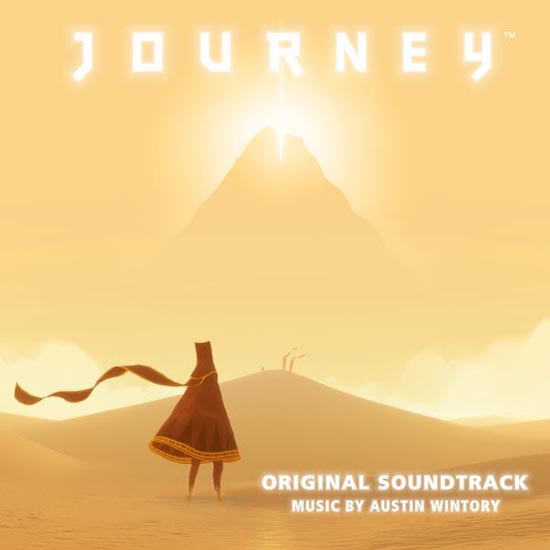
This man entered my radar only this year, but I pray that he will never fall off. I could contend that that if you want an absolutely beautiful, emotional experience that is both complex and accessible, you will get the soundtrack to Journey. On top of a superb game, Wintory's soundtrack is maybe the deepest experience you could have via a single video game soundtrack. It is a journey in and of itself, and upon the epic arrival of "Apotheosis," life just feels complete. The composition of that song rises and rises almost endlessly until it plateaus at the apex of your aural desire. It is a truly unfathomable song and album. I bought the soundtrack to flOw out of curiosity, and while it maintains a much simpler atmosphere, it contains "Gratitude," which seems like a taste of the greatness Wintory has yet to unleash on the world years later.


Kow Otani
What I have heard: Shadow of the Colossus

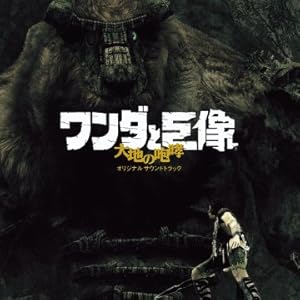
There is nothing else to hear, honestly. Whereas Shadow of the Colossus presents so many arguments for the idea of video games as art, the soundtrack acts as the pedestal for every point you could bring up. Fighting a colossus ultimately becomes synonymous with the dramatic rise of a wild string orchestra, whose strings switch to victorious themes as soon as your sword penetrates the flesh beneath each glowing symbol you encounter. It is hard to choose a favorite, but I love the flurry of "A Violent Encounter." It usually stands as my great example, but it's unfair to choose. "A Despair-filled Farewell" features an almost crying horn that adds to the emotional realization that you spend the game killing majestic beings. And something begins to swell within me as soon as I hear the bells chime in "Epilogue ~Those Who Remain~," which backs the credits as the player observes the fallen heaps of his or her own handiwork. Seriously, this soundtrack is indescribably memorable through and through.


Rei Kondoh
What I have heard: Okami, Bayonetta

Rei Kondoh is definitely not the only composer on these humongous 5-disc soundtracks, but his songs remain the most memorable to me. I have a huge penchant for the dramatic, as I have said, and Rei fits the bill. I loved every minute of Okami, but I think I first took notice of the soundtrack during "Giving Kushinada a Ride," which plays as a beacon of strength during a time in the game when everyone has succumbed to the sad fate of one of the characters. The listener can feel that important heroics are afoot, and this song narrates the journey towards facing one's fate admirably. From the same soundtrack, "The Sun Rises" oddly makes me a bit teary-eyed. Following a suspenseful moment near the end of the game, it acts as a reprise of the game's main theme, but mixes it into a triumphant ballad that defeats evil with its notes alone. The Bayonetta soundtrack was notably all over the place in terms of style, but many of the booming tracks were composed by Kondoh, including all of the insane choirs that play during the epic boss fights. My favorites are near the end, though. "You May Call Me Father" backs an incredible battle as Bayonetta falls from the top of a huge skyscraper, and "The Greatest Jubilee" bears a sound as big as the universe as she fights to save it. These two tracks stand out for me because in contrast to the other boss themes, the choirs get notable reprieves from screaming their lungs out during a few movements, which makes their alarming return all the more deliberate and disquieting. If it would stir things up, I'd let Rei Kondoh conduct the choir at my funeral.


It does appear my passion for this post has gotten the better of me, so I will continue with a second part tomorrow! I do hope you're going and buying all these things, by the way.

(Part II can be found here.)


Images taken from Amazon, iTunes, and other Googled sources.