I have played sentimental games, and I have played games with true genius behind them, but rarely have I witnessed the two intertwined successfully. Often, games with raw emotional experiences sacrifice gameplay for storytelling, and some games with clever mechanics have lackluster stories. Depending on how you judge common gameplay devices, you might consider Papo & Yo, a new PSN exclusive from Minority Media, to be the perfect blend.
Papo & Yo acts as an allegory about a boy and his alcohol abusing father. Creative director, Vander Cabellero, is not simply content with letting the metaphor run by itself, so the game will wear its origin on its sleeve multiple times until it becomes readily apparent during the final few acts. Unlike Braid, this creator's vision will not remain hidden or argued about over internet forums. Caballero sought to share his own experience growing up with an alcoholic father through Papo & Yo, but while the purpose is clear, he is not pandering towards a specific population. This is a game one can easily enjoy, metaphor be damned, but the hope is the player will come away with something new to think about by the end. Without being didactic, Papo & Yo's story leaves the player to make his or her own conclusions about how to feel towards the characters.
The father in this game is represented by Monster, a large aptly-named creature that follows the main protagonist, Quico, a preteen boy, through a fantastical version of the favelas of Brazil. These shanty towns, built by arbitrarily stacking box-like houses on top of and around each other, serve as the perfect backdrop to this well-imagined tale. In contrast to an action game's typical tour through South America, often involving gangs and drugs, the favela is a colorful and benevolent landscape rife with puzzles to solve. The game largely appears to be imagined, and many of the puzzles Quico encounters take this real-life environment and show the player how a child might think it came to be. The mechanics behind solving them typically involve chalk drawings of levers, gears, and keys that Quico must use to literally move the homes of the favela around in order to proceed. Quicio, himself, acts as a serviceable platform navigator, being able run at a useful speed, withstand long jumps to the ground, and eventually cross larger gaps with the aid of his toy robot, Lula. Monster may be the primary antagonist, but like any human being, he isn't pure evil, and the game never paints him as such. The majority of the time, Quico can seek his aid with stepping on large switches or by using his tummy as a trampoline while he falls asleep against some propped-up boards. It is obvious that Quico and Monster are or should be friends, but Monster's weakness for frogs steps in the way of building that friendship to a fruitful level. When consumed, these frogs send Monster in a fiery rage, and the only target is the boy, who must run away and find a way to calm him in order to proceed. However, this is not a giant escort mission, and unlike Ico, neither character is helpless; theirs is a sad tale of codependence, but the wedge between them grows ever stronger.
A larger than life puzzle being solved with cardboard boxes.
The game is very linear and playable in 4-5 hours, but these qualities work to its credit. Every part of the environment the player can access is a room where a puzzle or land traversal will occur, and there are no notable forks in your path. There is one way to proceed, and if you enter an area initially of no use, you'll be back there in five minutes once you do some work elsewhere. Normally, when you play a game enough, these characteristics can become negatives, but in Papo & Yo, I would argue that they contribute to the genius I mentioned previously. Quico is not wandering the favela with Monster by coincidence. Unlike Mario's sisyphean trials and tribulations, which put him in an arguably confusing and unexplained land with each iteration, there is nothing random about this world. It is what Quico knows, and though it is not immediately apparent when starting a new game, he makes his way to each new section with purpose. Sidequests would only serve as distractions from the primary focus, and the game doesn't grant any trophy-rewarding collectibles until the second playthrough. Many of the questions the player may have during the beginning will be answered during play save for those most philosophical. The game is short because it has to be, and in a world where players increasingly demand bang for their buck, they need to accept the esoteric immediacy of the story's larger concept as the treasured bang.
The favela, both real and impossible.
All the puzzles Quico solves are organically incorporated into the favela environment. While the keys and levers that move the puzzle pieces may be inorganic, and the player doesn't see what put them there, their necessity becomes understandable. The world isn't telling Quico what he needs to advance so much as Quico imagined it himself. They start small, but eventually you will enter large areas with large machinations to use. These room-filling puzzles made up my favorite moments in the game, involving stacking homes to build a bridge or using the land as a large trap for a raging Monster. It is not long before the recognizable objects give way to abstractions protruding from the landscape, and the journey reveals larger instabilities in the environment, which beautifully reinforce both the reality and the fantasy behind the main character's trials.
Despite taking place within the imagination of a young boy, Quico is limited. He cannot fly, and, Lula notwithstanding, he cannot perform any grand feats. It begs the question of why a child would imagine himself in a world with limits, but self-sabotage is not a new concept to a victim of abuse. It is worth considering here. That said, pondering why Quico can't pick up a simple flower pot will only reveal design flaws. If it's not related to the quest at hand, Quico will not be interacting with it, and even in AAA games, frivolous accessible objects are becoming harder to explain. Additionally, although it only becomes obvious in a few scenes, characters' mouths don't move when they speak. Despite the fact that many gamers built emotional bonds with characters who often lacked fully-developed mouths entirely, when the camera zooms in on the face of a speaking person, it is rather unsettling to look at a frozen face. Unfortunately, there are real technical flaws to be witnessed, as well, the most common of which is collision detection. Monster's hulking frame and other objects in the environment intersect each other in unnatural ways that do not fit the fantasy. Though largely benign, these issues become offensive when Monster becomes frozen and unresponsive because of them, thus prohibiting the player's ability to proceed through the game. I finished the game twice, and this happened three times, only during my first playthrough. Thankfully, the third instance happened while Monster was already where I needed him, and activating the next puzzle mechanism set him straight again. Luckily, Papo & Yo's short chapters lead to relatively frequent checkpoints, and quitting and reloading takes under thirty seconds. It is worth noting that I played only after the Day 1 patch was released, which resolved some often cited clipping errors; I am happy not to somber this review with any further bugs.
Quico using Monster's belly to get to higher places.
Faults aside, the presentation is commendable. The bright colors of the homes jut out of cobblestone roads and lush greenery. Many objects and textures are repeated, but each chapter rearranges, manipulates, and abstracts them in imaginative ways, and the confined spaces of the residential areas are often interrupted by huge environments containing water bodies and pitfalls. Visuals in Papo & Yo are both done before and completely original, creating a juxtaposition that keeps the player interested and motivated. Almost every chapter also features gorgeous graffiti, drawn with stark lines and bold colors. Some seem random, but advancing past them frequently reveals the relation to a story or gameplay element. There is no HUD, and on-screen cues are usually reasonably sized and clear, such as a tree with a word bubble containing a square to indicate how to interact with it. Dialogue is presented in black word bubbles with white type, but the spoken language is indiscernible and made up, increasing the global accessibility. Filling the aural void further is refreshing music with a heavy South American flair. Composed by La Hacienda, the songs you hear build drama behind the puzzle solving, and it all culminates in a beautiful track before the credits, featuring an angelic choir of children. The studio also recorded all the voice work and sound effects, which are all executed gracefully.
I am burdened with the fact that I cannot further discuss the concepts and metaphors that make this game such a work of art without revealing too much. I have already made too many conclusions here, but there are so many more to make. Suffice it to say that this game is very fun, with each drawn device building the fantasy and activating previously unseen ways to manipulate the environment, but fun comes at a price. Vander Cabellero and his Minority Media team make the player think about why we do fun things, what we ultimately stand to gain from having fun, and why fun isn't permanent. This is not a hero story. The plot twist is both completely unexpected and right in front of your nose. Before the game reveals it to you, it forces the player to sit through a truly heartbreaking moment of pause. This is a story about a very real boy and a very real situation. Via the element of play, you are drawn into his reality without your permission. Play it. Play it again. The final genius stroke may be that replaying the game makes sense within the context of the story.
Where the writer realizes his folly in trying to fit his passion into one blog post.
Yesterday, I went on quite a yarn about my love for video game soundtracks, and I managed to name some of my top picks for composers. But the sad truth is I just wasn't done. I simply felt bad for you, the reader, who would be forced to endure a year-long blog post, so I split it into two for your convenience. Without further ado, here are my remaining notable video game soundtrack composers. Nobuo Uematsu
What I have heard: Final Fantasy VII, Final Fantasy VIII, Final Fantasy IX, Final Fantasy X, Final Fantasy VII: Advent Children
"Prelude." One could make an argument for many of his songs as iconic, but "Prelude," a repeated theme throughout the Final Fantasy series (most of which, I have not played), not only acts as an introduction to some of the iterations, but hearing it invokes the spirit and memories of every Final Fantasy game you've ever played. There are several versions of it, but oddly, my favorite it the live version, as performed by the Distant Worlds orchestra. If you ever get a chance to see them perform, it's amazing, and Nobuo is usually not far. Aside from the larger game themes, such as "Liberi Fatali" and "The Place I'll Return to Someday," many fans remember the smaller pieces clear as day. Some of my favorites include the latter portion of "The Planet's Crisis" (FFVII) and "You're Not Alone" (FFIX). Often, the best way to describe his work is very JRPG and very fantasy, but there's a reason he's famous. It may have something to do with the memorable tunes.
Even if you have not played the game, you probably watched the first epic trailer that came out for the game, which revealed the main story arc. The background music is the vocally lush sci-fi piece called, "Icarus." This and the remainder of the soundtrack really make the case for orchestral music standing alongside electronic music. You are never taken out of the futuristic setting of the game as you peruse the tracks composed by McCann. Notable tracks include the exciting "First and Last" and "Return to Hengsha," which layer the action elements of the game successfully into the sounds you hear.
If you listened to the L.A. Noire soundtrack without knowing what it's from, you'd think you were listening to an old movie soundtrack. Emulating a time period without grotesquely mimicking it can sometimes be a challenge, but every track in this album is a trip to another era. You can feel the mystery and tension build with each track, and the navigation from sweeping orchestras to soft jazz successfully root the listener in the spirit of the late 40s crime dramas. What I also enjoy about this soundtrack is Hale's suites of songs, which serve as the background to specific chapters in the game. Although they waver through highs and lows, their tones are usually fitting for the moments in the story they represent.
This soundtrack is one of utmost quality. Like Andrew Hale's L.A. Noire, it successfully invokes the era of the game's setting, but where it stands apart is in how it modernizes it. You'll hear authentically Western-sounding guitar arrangements and string movements, but they will be layered on top of drum-and-bass beats and jarring arrangements. The build of the drums and orchestra in "El Club de los Cuerpos" hook me every time I hear it, especially one the herd of trumpets chime in. I also adore the percussion-navigated trip of "Triggernometry," whose main brass melody served as my phone's ringtone for a number of months recently. All the tracks serve the Rockstar pulp fittingly.
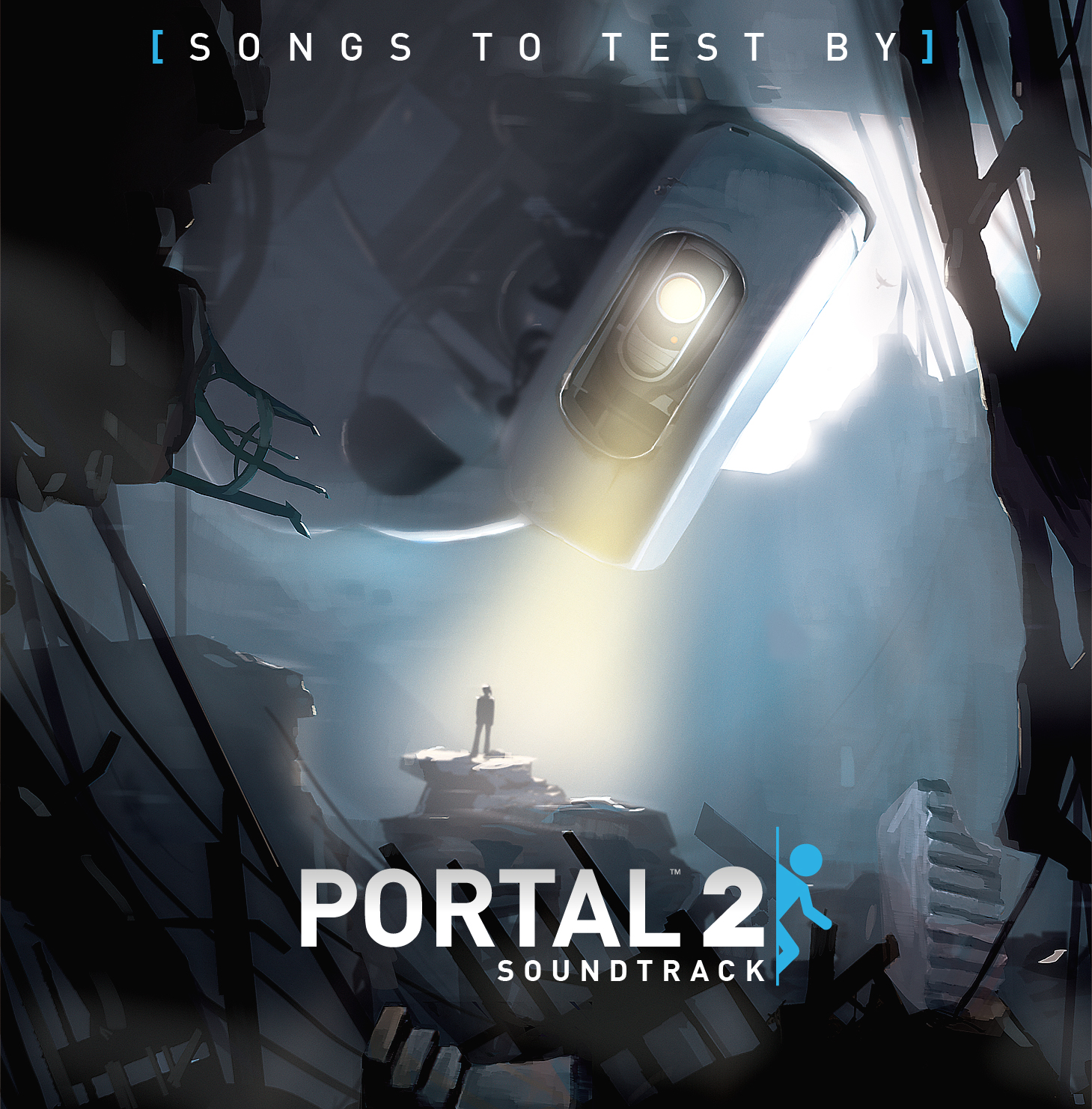
Although most of us only recall Ellen McLain's singing on "Still Alive" from the original Portal soundtrack, there is so much more to take notice of with Mike Morasky's compositions in Portal 2. There are obvious star songs like "Science Is Fun" and "You Will Be Perfect" to enjoy, but many of the tracks on the 3-disc score were procedurally generated in the game, meaning everyone's first experience with these songs was unique. Still, the composer, under the pseudonym, Aperture Science Psychoacoustics Laboratory, managed to bring all his samples together for an intriguing journey through the rundown puzzle gauntlet of the game. "Love as a Construct" and "You are Not Part of the Control Group" are two good examples of songs culled from these moments in the levels, and they ultimately add to the atmosphere of awe and wonder the player feels while trying hard not to die. Of the soundtracks I've mentioned thus far, it's worth noting that the orchestral work takes a back seat to seriously creative and compelling electronic musical structures. They typically return during larger story moments, but it is hard to miss them with all this good music being offered.
And the honorable mentions...
Without pumping out the theatrical writing for every soundtrack I own, I did want to mention additional selections from my library worth owning and listening to. (Also in no particular order.)
Experiencing the dark vacuum between failure and success.
As much of a mystery that video game development remains to most gamers in general, it would appear that the world of indie game development maintains a more nebulous reputation. It is often easy to just imagine two guys goofing off in their parents' basements lobbing ideas back and forth at each other in a creatively nurturing environment. You can almost smell the Hot Pockets. I, too, am guilty of imagining my favorite indie games being produced in such a fruitful atmosphere. Indie Game: The Movie offers a stark contrast to the buddy comedy imagining of independent game development, and it drags the viewer into a rather dark emotional place that could exist in all of us; it just takes the right close-to-home project to suss it out.
Fez creator, Phil Fish, laments at his hotel's bar.
Kickstarted before kickstarting was cool, James Swirsky and Lisanne Pajot have crafted a fascinating tale of the development of two games, Super Meat Boy and Fez. Despite the naïveté with which I approached the film, the fun of video games is not present here, not that it has to be. Although the are struggles witnessed remain specific to the video game industry, the film ends up being more about coping with being on the cusp of finishing your life's work. The developers featured here find themselves in a state where not finishing their games is no longer an option, and the idea that success is not guaranteed weighs heavily on them, their families, and their qualities of life. The two games featured in Indie Game: The Movie follow different paths towards the end of the film. Super Meat Boy is near the end of its development cycle, and two friends, Edmund McMillen and Tommy Refenes, are both cracking under the pressure of completing the game to make a special deadline for Microsoft (the game was developed for the Xbox 360). Edmund, a noted graphic artist and video game designer, lives far from Tommy, in a house shared with his wife, Danielle. It is clear that the couple dreams of a better life for themselves involving a bigger house and a sphinx kitten, but the long time it's taking to finish the game has left money tight, and the amount of time Edmund spends working each day leaves his relationship with his wife less than idyllic. Tommy, the main programmer, on the other hand, lives at home with his family, but while he lacks his own family and property to support, he clearly fears the void that would be left by an unsuccessful game launch. He remarks that his parents had to refinance their mortgage four years before paying it off, and he clearly wants to reward them for their continued encouragement. These two friends clearly have a strong bond, but there are not a lot of good times or laughter to watch. Perhaps in an effort to build tension from the start, Indie Game starts with the Super Meat Boy launch day, and a frantic Tommy is panicking because the game is no where to be seen on the Xbox Live Marketplace.
Tommy Refenes, Super Meat Boy programmer, works alongside an obscured Edmund McMillen.
Phil Fish, creator and artist behind Fez, has a largely insular experience throughout the film. His programming partner, Renaud, notwithstanding, he goes through the full gamut of emotions and depression entirely by himself. Whereas the viewer can sympathize with the weight of the work Edmund and Tommy have to do, Phil's story demands a part of the viewer's soul. It has been nearly five years since the game was revealed to the public in 2007, and after three overhauls and several missed deadlines, his visions of failure are continually exacerbated by the criticism he receives from Fez fans on the Internet. Like a nightmare indicative of the sorts of drug-induced hallucinations one would see in a thriller, these anonymous voices turned from resounding support to sickening death threats, and they ebb at Phil's already crumbling psyche. The pressure continues to build when Phil is faced with a potential legal battle with his former partner, which could prevent him from revealing his life's work at PAX East in Boston. Being unable to demo Fez to the public after years of waiting could mean the end of the game's development as a whole, and Phil reveals to the interviewer, whether literally or figuratively, that he would kill himself if he can't finish. These are some dark tales, and the filmmaking never severs the disparity felt in Indie Game: The Movie. Save for a few moments, the interviewer remains absent, and there is no narrator. The developers tell their stories either to the camera or through their actions as they reach certain milestones on the way to the end of the film. Although video game fans are already aware that both games were successfully released to critical acclaim and significant sales numbers, these facts do not lessen the drama. To the film's credit, it never tries to make any statements about the video game industry itself, nor does it directly critique Microsoft or other publishers of digital content. It remains focused on these two development stories, perhaps in a futile effort to remind the fans that there are real people behind these games, and critique is not dispersed over a team of a thousand designers and programmers. Jonathan Blow of Braid fame is also featured for commentary. Although his game had been released to the public several years before (and Edmund McMillen contributed art to it, which was never used), Blow's presence offers a dissenting opinion on the aftermath of success; what happens when people love the fruits of your labor, but they don't understand it the way that you do? In his case, you take to the Internet to explain yourself.
For your consideration.
The whole of the documentary is filmed in very high quality, and much of the cinematography involves skewed angles and strong closeups on the people involved. The environment plays a large role in the trip into the developers' psyches, and the camera is often aimed at all the tiny elements that reveal the games' influences outside of the computers they were created on. However, sometimes the film reveals shots from their hometowns or outside convention centers, which do not contribute to the immersion the viewer needs to fully appreciate the tales told here. Ironically, the most irrelevant image is the one used for the bulk of the documentary's promotion: the SNES controller hanging from power lines. Despite the influence games of the SNES era may have had on the games featured here, there is no clear tie-in between this random shot and the developers. I would even argue that the fact that the SNES did not feature digital downloads or independent game development only harms the core themes of the film. But I digress. Minor missteps aside, Indie Game: The Movie is a worthwhile and unexpected trip for the psyche. You will not learn how games are made or the secrets behind game publishing. Most likely, you will come away from the film with the understanding that choosing to work on a huge project with minimal help has major consequences, and the risk of failure becomes the elephant in the room the longer it takes to complete. Wrought with emotional tension and drama, it is a must for video game fans who are remotely curious about what happens before the fun. Images taken from Steam.