No, really, I'm serious.
My first video game soundtrack was
Burn: Cycle, composed by Simon Boswell. The PC version of the game came with it by default. (By the way, does anyone remember the CD-i?) Be that as it may, it only ignited a small flame within me that would not rage into a fire for many years. Still, there were a few other notable additions to my soundtrack collection until it became a full-on obsession. I was among the small population that owned a Sega Saturn, which I purchased mainly for
NiGHTS into DREAMS. I loved the game, but somehow or another, I discovered that the themes to all the boss battles, not the level music, were accessible via a regular CD player. That said, it meant I could eventually rip the music onto MP3 format once that became popular. The next game I could do this for was
Earthworm Jim 2, which was composed primarily by Tommy Tallarico. That soundtrack was a double bonus because it contained some awesome tracks from him, but it also had the 3rd movement of Moonlight Sonata (Beethoven), which I think is the best movement.
It wasn't until
Myst III: Exile did my interest truly get sparked. The theme to that game really opened my eyes to the potential a game soundtrack could possess. It also spoke to me directly as I have a rather exploitable love of songs that start small in production but become booming choral masterpieces by the end. Thus, Jack Wall created the standard by which I would judge future soundtracks, and the next one I would actually own would be
Myst IV: Revelations, whose main theme is an awesome tribal piece done with a choir in 7/4 timing. However, it was hard to maintain just one composer to love as time went by.
Stepping back a little to the year, 2000, that is when I played
Final Fantasy VIII on the PC. While I wouldn't own the soundtrack for a number of years, I think many gamers around the world are with me when I say this: "Liberi Fatali," the opening theme to the game, is a masterpiece on par with "Carmina Burana" (Orff) in terms of drama and fantastic choral work. I must have started a new game about 50 times either to watch the opening sequence myself or to show it to others, and it always solicited a "wow" response from my friends.
Well, these are my origins, but I won't go into every single inspiring soundtrack I've come across. There are probably many more I forgot or cannot access anyway. What I will focus on is the composers and their soundtracks or notable songs. I have played the games corresponding to each of these, and I honestly feel that your ears are missing something by not having access to some songs.
(In no particular order.)
Jack Wall
What I have heard:
Myst III: Exile, Myst IV: Revelation, Mass Effect, Mass Effect 2, Jade Empire
I already stated that I love him. You may have never heard of
Myst III or
IV (did you know there were sequels to
Myst?), but I'll tell you what you have heard of:
Mass Effect. He was lead composer on the soundtracks for both
Mass Effect and
Mass Effect 2, and he did just as much of an amazing job on both. They both possess arguably different sounds to match the narratives they back.
Mass Effect has more of the sci-fi edge to it with a lot of notable synthesized sounds, but it also possesses a lot of drama. Songs like "Breeding Ground" and "Exit" are sweeping pieces that invoke memories of the exciting missions you encountered throughout the game. On a tamer note, though, "Uncharted Worlds" and "Vigil" have become iconic and hauntingly beautiful themes carried throughout the entire series, invoking a sad peace among the chaos of the larger story arcs. With
Mass Effect 2, the focus shifted to the characters themselves, and they each have a theme. Starting with "The Illusive Man," which sets a haunting tone for one of the most notorious characters, the soundtrack almost serves as the narration itself. Listening to the undulating brass work on "Jacob" or the cries of the vocalists on "Samara" easily take you back to their characters and the missions you performed for and with them.
Sam Hulick, Sascha Dikiciyan, Cris Velasco, Chris Lennertz
What I have heard:
Mass Effect, Mass Effect 2, Mass Effect 3
Although I would love to sing only Jack Wall's praises for the
Mass Effect soundtracks, I simply cannot. He did not work alone. All of these composers created notable tracks across all three soundtracks. It's also worth noting that the Sonic Mayhem duo, Sascha Dikiciyan and Cris Velasco, did all the music to the
Kasumi's Stolen Memory DLC, and Chris Lennertz composed the wildly dramatic scores to
Overlord and
Lair of the Shadow Broker DLCs. Sam Hulick's notable contributions were on the
Mass Effect soundtrack, where he composed the awe-inspiring theme for "The Normandy" and the victorious "From the Wreckage." Thus, it's worth mentioning that the game basically begins and ends with Sam Hulick. Just sayin'.
Jesper Kyd
What I have heard:
Assassin's Creed, Assassin's Creed II, Assassin's Creed: Brotherhood, Assassin's Creed: Revelations, Borderlands, Darksiders II
To me, Jesper Kyd was reinvigorating. Listening to his work made be super passionate about video game soundtracks all over again. At this point, he is mostly known for his work on the
Assassin's Creed series and with good reason. Whereas the first game's soundtrack was impressive, with sweeping themes for the various Middle Eastern areas, such as "Flight through Jerusalem," his command over the audience comes with the opening triptych of
Assassin's Creed II. If I could recommend three songs that belong together to play on repeat, it would be "Earth," "Venice Rooftops," and "Ezio's Family." Through them, he establishes a musical theme that would carry through the game via various instruments and voices. It manages to be memorable while subtle at the same time. These acclaims aside, it is the entirety of the
Assassin's Creed: Brotherhood soundtrack where Kyd shines, and it is due to the excellent percussion work. There is so much variety in the percussion here, from the sounds of marching in "Flags of Rome" to the almost heart-like pounding of "Borgia Occupation," which sadly disappears from the game once you've successfully captured all of Rome for the assassins. Although I am still listening to it, I would like to assure the video game world that the
Darksiders II soundtrack is arguably an even greater tour de force embodying so much variety and interest in its double-disc size.
Austin Wintory
What I have heard:
flOw, Journey
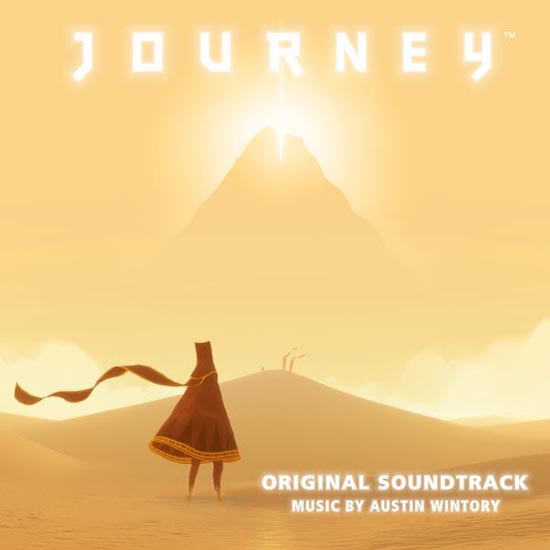
This man entered my radar only this year, but I pray that he will never fall off. I could contend that that if you want an absolutely beautiful, emotional experience that is both complex and accessible, you will get the soundtrack to
Journey. On top of a superb game, Wintory's soundtrack is maybe the deepest experience you could have via a single video game soundtrack. It is a journey in and of itself, and upon the epic arrival of "Apotheosis," life just feels complete. The composition of that song rises and rises almost endlessly until it plateaus at the apex of your aural desire. It is a truly unfathomable song and album. I bought the soundtrack to
flOw out of curiosity, and while it maintains a much simpler atmosphere, it contains "Gratitude," which seems like a taste of the greatness Wintory has yet to unleash on the world years later.
Kow Otani
What I have heard:
Shadow of the Colossus
There is nothing else
to hear, honestly. Whereas
Shadow of the Colossus presents so many arguments for the idea of video games as art, the soundtrack acts as the pedestal for every point you could bring up. Fighting a colossus ultimately becomes synonymous with the dramatic rise of a wild string orchestra, whose strings switch to victorious themes as soon as your sword penetrates the flesh beneath each glowing symbol you encounter. It is hard to choose a favorite, but I love the flurry of "A Violent Encounter." It usually stands as my great example, but it's unfair to choose. "A Despair-filled Farewell" features an almost crying horn that adds to the emotional realization that you spend the game killing majestic beings. And something begins to swell within me as soon as I hear the bells chime in "Epilogue ~Those Who Remain~," which backs the credits as the player observes the fallen heaps of his or her own handiwork. Seriously, this soundtrack is indescribably memorable through and through.
Rei Kondoh
What I have heard:
Okami, Bayonetta
Rei Kondoh is definitely not the only composer on these humongous 5-disc soundtracks, but his songs remain the most memorable to me. I have a huge penchant for the dramatic, as I have said, and Rei fits the bill.
I loved every minute of Okami, but I think I first took notice of the soundtrack during "Giving Kushinada a Ride," which plays as a beacon of strength during a time in the game when everyone has succumbed to the sad fate of one of the characters. The listener can feel that important heroics are afoot, and this song narrates the journey towards facing one's fate admirably. From the same soundtrack, "The Sun Rises" oddly makes me a bit teary-eyed. Following a suspenseful moment near the end of the game, it acts as a reprise of the game's main theme, but mixes it into a triumphant ballad that defeats evil with its notes alone. The
Bayonetta soundtrack was notably all over the place in terms of style, but many of the booming tracks were composed by Kondoh, including all of the insane choirs that play during the epic boss fights. My favorites are near the end, though. "You May Call Me Father" backs an incredible battle as Bayonetta falls from the top of a huge skyscraper, and "The Greatest Jubilee" bears a sound as big as the universe as she fights to save it. These two tracks stand out for me because in contrast to the other boss themes, the choirs get notable reprieves from screaming their lungs out during a few movements, which makes their alarming return all the more deliberate and disquieting. If it would stir things up, I'd let Rei Kondoh conduct the choir at my funeral.
It does appear my passion for this post has gotten the better of me, so I will continue with a second part tomorrow! I do hope you're going and buying all these things, by the way.
(Part II can be found
here.)
Images taken from Amazon, iTunes, and other Googled sources.